
How big is a solar panel? And how many do I actually need for my house?
These are two of the most common questions homeowners ask when researching solar for their house. The answer to both depends on your roof, your energy, and your goals, which will be broken down clearly in this guide.
Understanding solar panel size helps you have more informed conversations with installers. And if you're considering solar installation in Sydney, knowing the basics puts you in a much stronger position.
What Are the Standard Solar Panel Dimensions?
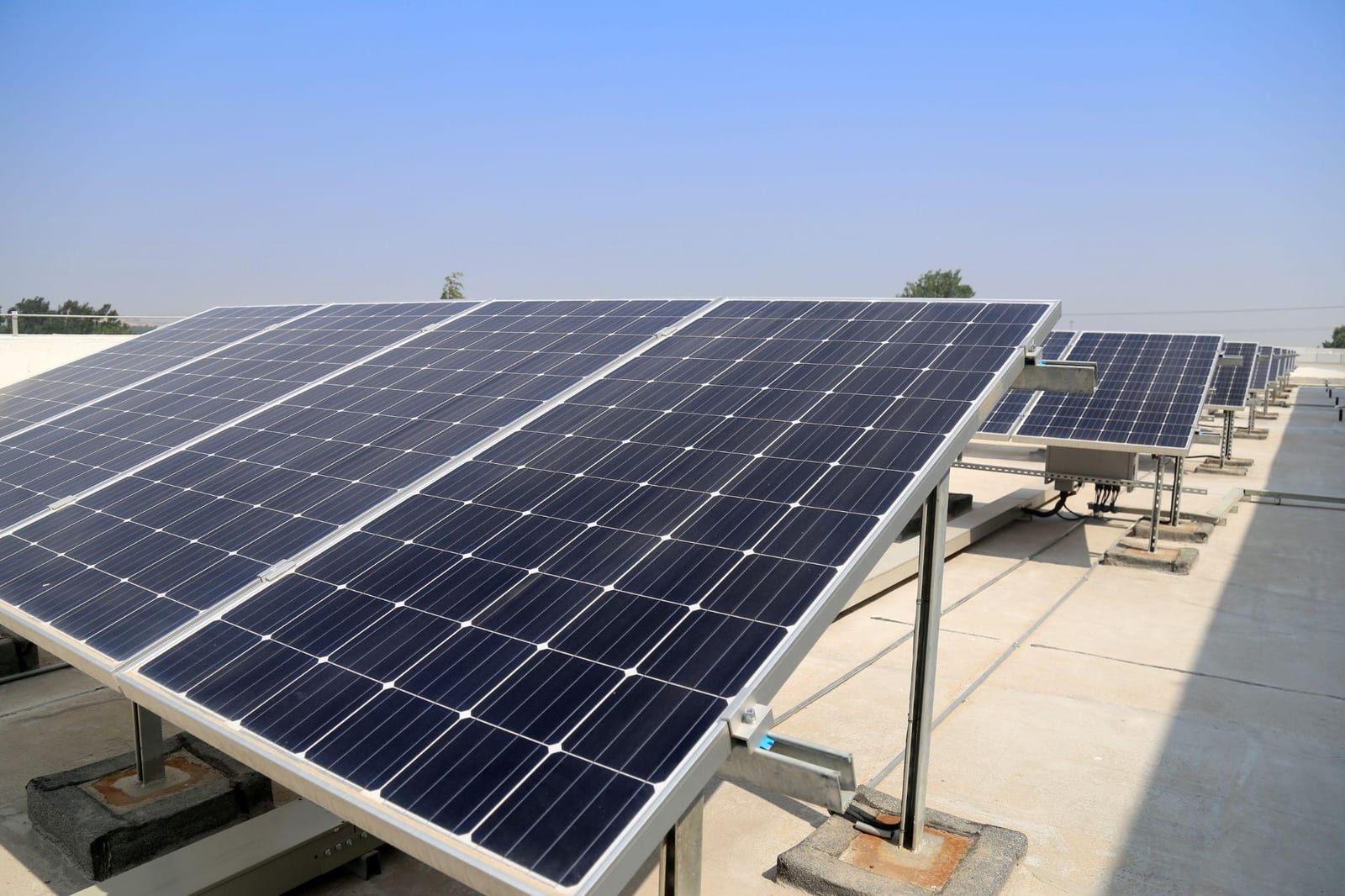
Most residential solar panels in Australia are roughly the size of a door, approximately 1.7 m tall by 1.1 m wide. They're slim (usually 30–35 mm including the aluminium frame) and weigh between 19 and 22 kg each.
Weight matters more than most people expect. Your roof needs to carry the structural load of every panel you install, plus the racking hardware. On older homes or roofs with irregular framing, this is something a qualified engineer must assess before any system is designed.
Residential vs. Commercial Panel Dimensions
| Panel Type | Dimensions (approx.) | Weight (approx.) | Typical Wattage |
|---|---|---|---|
| Residential (120 half-cut cell) | ±1.7–1.8 m × 1.1–1.2 m | ±18–23 kg | ±440W–500W |
| Larger commercial-style (144 half-cut cell) | ±2.0–2.3 m × 1.0–1.13 m | ±23–32 kg | ±500W–650W+ |
Source: Compiled from current product datasheets published by Trina Solar (Vertex S+, Vertex), Jinko Solar (Tiger Neo, Tiger Pro), LONGi (Hi-MO X6), Tindo, REC and Aiko accessed June 2026. Actual dimensions, weight and wattage vary by brand and model. Refer to product datasheets and a SAA-approved installer for site-specific system design.
Note: Large-format panels are increasingly common on residential roofs to maximize wattage per square meter. Always consult a SAA-approved installer for site-specific requirements.
Large-format panels aren't just for commercial projects. They're increasingly being used on larger residential roofs because they deliver more wattage per panel.
In some situations, installing fewer large-format panels can achieve the same system capacity while reducing the total number of modules required although this may carry some risk when it comes to installation.
Solar Panel Size vs. Solar System Size: What's the Difference?
"Solar panel size" actually refers to two different things, and it's worth separating them early.
Physical size refers to the dimensions and weight of a single panel, what we covered above. System size refers to the total capacity of your solar installation, measured in kilowatts (kW). Most homeowners asking about panel size are actually interested in both.
System capacity is calculated by multiplying the number of panels by the wattage of each panel. A 6.6 kW system, the most common residential size in NSW, typically uses around 14 × 475W panels.
Meanwhile, a 10 kW system (which is increasingly popular with larger households, EV owners, and small businesses) requires roughly 20–22 panels.
If you're running a business or managing higher energy loads, a commercial solar system will likely involve a larger panel count, a higher-capacity inverter, and different grid connection requirements.
How Much Roof Space Do You Need for Solar?

Each standard residential panel covers about 1.7–1.9 m² of roof space. A useful rule of thumb: allow 4–5 m² of usable roof space per kW of solar capacity you want to install.
Quick Roof Space Reference
The Australian Government estimates that a typical 6.6 kW solar system requires around 29–32 m² of roof space, although actual requirements depend on panel dimensions and roof layout.
| System Size | Approx. No. of Panels (440W) | Estimated Roof Space Needed |
|---|---|---|
| 6.6 kW | ±15 panels | ±29–32 m² |
| 10 kW | ±23 panels | ±40–45 m² |
| 13 kW+ | ±30 panels | ±52–58 m² |
Source: Panel counts calculated using 440W solar modules. Roof-space estimates adapted from Australian Government solar sizing guidance and typical panel dimensions of approximately 1.7–1.9 m² per module. Actual requirements vary depending on panel dimensions, roof layout, setbacks, and installation design.
"Usable" roof space is the key qualifier here. It means roof area that is north-facing (or northeast/northwest), unshaded, and clear of obstacles like skylights, vents, air conditioning units, and solar hot water systems.
Why Generic Roof Space Calculators Often Get It Wrong
Online solar calculators are a useful starting point, but they assume ideal conditions: a flat, fully north-facing, unshaded roof. Most Sydney homes don't have that.
Roof pitch affects panel angle and output. Partial shading from a neighbouring building or a single large tree can significantly reduce the performance of an entire string of panels. And structural load capacity varies considerably between a solid brick home and a lightweight steel-framed building.
Only a site-specific layout from a qualified engineer will tell you exactly how many panels your roof can physically accommodate and how they'll actually perform. An engineering energy assessment accounts for all of this, rather than relying on a best-case assumption.
How Many Solar Panels Does a Home Actually Need?
The honest answer depends on three things: your daily energy consumption, the wattage of the panels you choose, and how much reliable sunlight your roof receives.
Most Australian households use between 11 and 23 kWh of electricity per day, although usage varies significantly depending on household size, appliances, and whether the home uses electricity for heating, cooling, hot water, or electric vehicle charging.
A 6.6 kW system typically generates around 26 kWh per day on average across the year, with actual output varying by season, weather, orientation, and shading.
Households with electric vehicles, pool pumps, or ducted air conditioning should seriously consider 10 kW or more.
If you're also planning to add a home battery (such as a Sigenergy or a Tesla Powerwall), sizing your system larger from day one avoids the hassle and cost of upgrading later.
Higher wattage panels (in the 440W–475W range) mean you need fewer panels to reach the same system capacity. If your usable roof area is limited, this is often the smarter choice.
A Quick System Size Reference for NSW/Sydney
The Australian Government estimates that a typical 6.6 kW solar system requires around 29–32 m² of roof space, although actual requirements depend on panel dimensions and roof layout.
| Household Profile | System Size | No. of Panels (440W) | Est. Roof Space |
|---|---|---|---|
| Average 2–4 person household | 6.6 kW | ±15 panels | ±30 m² |
| Large families, EVs, pool pumps | 10 kW | ±23 panels | ±43 m² |
| SMBs, high-use homes, battery pairing | 13 kW+ | ±30 panels | ±55 m²+ |
Adapted from Energy.gov.au guidance on solar system sizing. Panel counts estimated using 440W panels, roof-space requirements are approximate.
What Factors Determine the Right Solar Panel Size for Your Home?
Two homes on the same Sydney street can need completely different systems. Here are the key variables that actually matter:
- Daily energy consumption. Pull your last three to six electricity bills and calculate your average daily kWh. This is your baseline. It's more useful than any estimate.
- Roof orientation and pitch. In NSW, north-facing panels generally receive the most sunlight and produce the highest annual output. East/west split installations are workable and worth considering if your north-facing space is limited.
- Shading. Even partial shading, from a neighbouring roofline, a chimney, or a few tree branches, can cut output significantly. The impact depends on your inverter and panel technology, but it's always worth mapping.
- Future energy loads. Because STCs are calculated based on the system installed at the time of installation, it's worth considering future electricity needs when sizing your system. Additional panels added later may be eligible for STCs if they meet scheme requirements, but expanding a system can be more complex and costly than sizing appropriately from the outset.
- Grid export limits. Some distribution network zones in NSW have restrictions on how much solar energy you can export back to the grid. If you're in a constrained area, a larger system may generate energy you can't fully use or export, which changes the value calculation.
The Guwing Green Approach: Engineer-Designed, Not Guessed
Guwing Green's SAA-accredited engineers will assess every one of these factors before recommending a system size.
The process isn't a one-size-fits-all quote, it's a proper engineering energy assessment that models your household's consumption profile and designs a system to deliver real, predictable savings.
This matters because the difference between a system that looks right on paper and one that actually performs often comes down to details a generic installer won't check.
Frequently Asked Questions About Solar Panel Size
What is the standard solar panel size in Australia?
Most residential panels used in NSW measure around 1.7 m × 1.1 m and weigh 18–22 kg. For system capacity, the most common size installed nationally is 6.6 kW, typically made up of around 15 panels.
How much roof space does a 6.6 kW solar system need?
Allow approximately 29–32 m² of usable, unshaded roof space for a 6.6 kW system. The exact number depends on your roof's layout, pitch, orientation, and any obstacles such as vents, skylights, or air conditioning units.
Does a bigger solar panel mean more power?
Not necessarily. Physical dimensions and wattage are related but not the same. Two panels with identical measurements can produce different amounts of power depending on their cell technology and efficiency rating. High-efficiency monocrystalline panels can generate more output in the same footprint than older polycrystalline technology.
Can I add more panels later if I start with a smaller system?
Sometimes, but only if your inverter has enough headroom and your roof has available space. It's worth asking your engineer to design with future expansion in mind from day one. This is a standard part of how Guwing Green approaches every installation. For more answers, see our frequently asked questions about solar.
The Right Solar Panel Size Starts With the Right Assessment
Solar panel size isn't a one-size-fits-all question. The right answer depends on your specific roof, your household's energy use, your future plans, and the grid constraints in your area.
Generic online calculators and standard panel counts are a useful starting point, but they're not a design.
If you're ready to get a system size you can actually trust, Guwing Green offers engineer-led assessments that take your full situation into account. Book a free consultation and get a solar system design in Sydney built around your home!
Filed under