
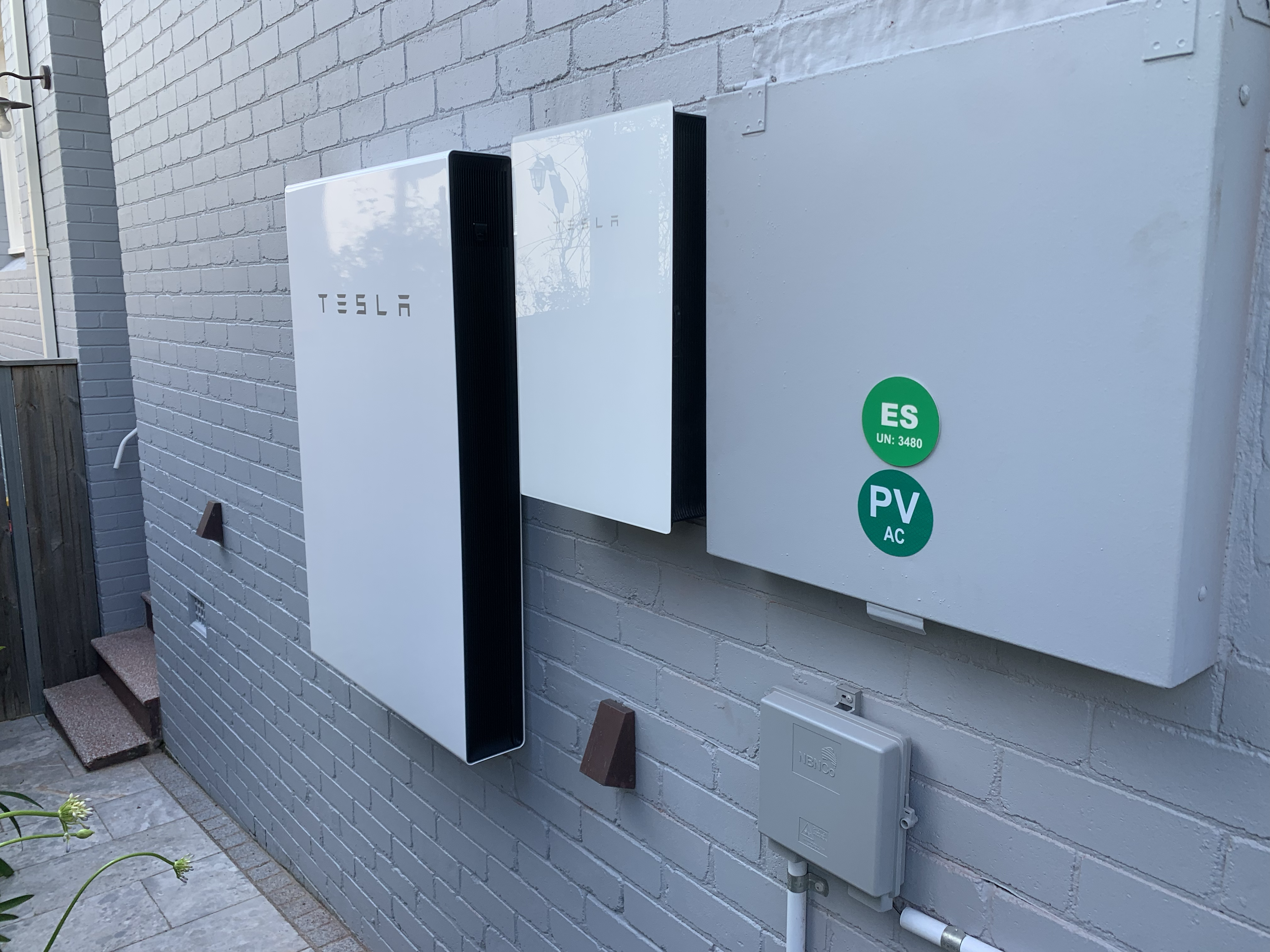
A solar battery can be installed outside, provided the battery is outdoor-rated and the spot meets AS/NZS 5139:2019, the Australian standard for battery systems connected to inverters.
That's the short answer, but the location still has to clear a specific set of safety, weatherproofing and compliance checks before an installer can sign it off.
Outdoor walls are a common place to mount home solar and battery systems across Sydney and NSW. Garages are often full, and the standard rules out habitable rooms, so the side or rear wall of a house is frequently the most practical option.
At Guwing Green, our SAA-accredited engineers assess the site before recommending a location, looking at clearances, wall construction, sun exposure and access rather than simply picking the nearest blank wall.
What follows is how the rules work, what makes a battery outdoor-rated, and how to tell whether your preferred spot is likely to pass. It also covers how an outdoor install fits with the federal rebate and the NSW Home Energy Saver loan, and what working with Guwing Green looks like from your first enquiry to installation day.
What AS/NZS 5139:2019 Actually Covers
AS/NZS 5139:2019 sets the safety requirements for battery energy storage systems connected to inverters, which includes almost every home battery paired with rooftop solar in Australia.
It deals with fire, electrical, chemical and energy hazards, and it is the reference point installers, inspectors and regulators use to judge whether an installation is safe.
The standard does not say batteries must go outside. It defines where they cannot go. Restricted locations include:
- Habitable rooms such as bedrooms and living areas
- Ceiling spaces, wall cavities and roofs without fixed stair or ladder access
- Under stairways and exit walkways
- Escape routes and exit paths
Those restrictions exist because lithium-ion fires are hard to fight. Fire and Rescue NSW recorded 332 lithium-ion battery-related incidents in 2025, and the state's fire commissioner has warned that these fires burn more fiercely than regular fires.
Many involved smaller products such as e-bikes and discarded batteries rather than installed home systems, but the standard still keeps home batteries away from bedrooms, exits and ceiling spaces as a precaution.
Once those are ruled out, the external wall of a house, a detached garage or a purpose-built enclosure often becomes the most straightforward compliant option. That's why an outdoor install is a normal choice.
Where an Outdoor Battery Can and Can't Go
An outdoor wall only passes if the battery sits far enough from openings and the wall itself won't help a fire spread indoors. AS/NZS 5139 sets minimum separation distances from doors, windows, vents, hot water units, air conditioners and other appliances.
Australia's electrical regulators summarise the main distances like this: a battery can't sit within 600mm of an exit, or within 600mm to the side and 900mm below an openable window or vent into a habitable room.
Appliances that aren't part of the battery system, such as hot water units and air conditioners, can't sit within 600mm to the side or 900mm above it. Amendment 1 changed a few of these details (more on that below), and the manufacturer's manual can be stricter than the standard, so the exact numbers depend on the battery model.
Wall construction matters just as much. If the battery is mounted on, or within 300mm of, a wall that has a habitable room on the other side, that wall needs to be non-combustible, such as brick or masonry, or have a non-combustible barrier fitted that extends past the battery's sides and top.
Timber-framed or weatherboard walls usually need this barrier added, which can add cost on older Sydney homes.
The spot also needs to be:
- Clear of likely flood levels
- Protected from vehicle impact, such as beside a driveway
- Accessible for servicing and emergency isolation
- Fitted with the required safety signage, which is part of a compliant install rather than an optional extra
Not sure whether your side wall, garage corner or shed will tick these boxes? A quick conversation with an SAA-accredited Guwing Green engineer is the easiest way to find out. You can start that conversation here, with no obligation.
What "Outdoor-Rated" Actually Means
An outdoor-rated battery is one the manufacturer has designed and certified for exposure to dust, rain and temperature swings.
The quickest check is the IP (Ingress Protection) rating on the spec sheet. The first digit covers dust and the second covers water, and most batteries sold for outdoor mounting in Australia carry IP55 or higher.
The rating is only half the story. The installation manual sets the conditions the warranty depends on, including:
- The operating temperature range
- Whether direct sun is allowed
- Minimum distance from the coast for salt exposure
- Mounting height
A battery that is outdoor-rated but installed outside those conditions can lose warranty cover even if it meets the standard.
If a battery isn't outdoor-rated, it can still go outside inside a compliant, ventilated enclosure designed for that purpose. That adds cost, so it usually makes more sense to choose an outdoor-rated model from the start if an external wall is the plan.
Heat, Sun and Australian Summers
Heat is the main thing to plan for with an outdoor battery, because high temperatures can reduce performance and shorten lifespan.
Most lithium home batteries protect themselves by throttling charge and discharge when they get too hot, which means less usable power exactly when households need it.
Sydney's official weather station topped 42°C twice in summer 2025/26, on 19 December and 10 January, and Holsworthy in the south-west reached 43.5°C on the second day.
Hot evenings like those are when a battery is expected to carry the house, and when an overheated unit is most likely to scale back.
The best outdoor spots are shaded, south- or east-facing walls with good airflow. West-facing walls that take full afternoon sun are usually the worst choice. Where there's no better option, an awning or sun shield approved by the manufacturer can help, as long as it doesn't block required ventilation or clearances.
On a site visit, our engineers will check how much sun each wall gets through the day and how well air moves around it before recommending one, rather than defaulting to whichever one sits closest to the switchboard.
Home Batteries by the Numbers: Why Placement Matters
Over 500,000 batteries had been installed under the federal Cheaper Home Batteries Program by 14 August 2026, just over 13 months after it began on 1 July 2025. Rooftop solar already sits on more than one in three Australian homes, which leaves plenty of room for that number to grow.
Sydney sits at the centre of that growth. The Castle Hill postcode has recorded more Cheaper Home Batteries installations than any other in the country.
In western Sydney, the electorate of Mitchell climbed from 108th nationally in 2024 to third for battery uptake. More than three quarters of program installations have been in outer suburban and regional areas.
Systems are also getting bigger, with average capacity under the program rising from about 25.2kWh at the 250,000-installation mark to roughly 28kWh by 400,000 installations.
Bigger batteries take up more wall space, weigh more and can give off more heat, so a compliant, well-ventilated spot matters even more.
In the June 2026 quarter, household battery capacity across the National Electricity Market grew by 3,283MWh, or 41%, according to AEMO's latest Quarterly Energy Dynamics report.
For a household, getting full value from every stored kilowatt-hour starts with a location that lets the battery run at full capacity for its whole life.
Outside, Garage or Indoors?
For most homes the choice comes down to an external wall or the garage, because habitable rooms are off the table under AS/NZS 5139.
| Location | Main Advantages |
|---|---|
| External wall | Frees up indoor space, usually close to the switchboard, easy access for servicing |
| Attached garage | Sheltered from weather and direct sun, often cooler than a west-facing wall |
| Detached shed or enclosure | Physical separation from the home, flexible placement |
| Inside the home | Habitable rooms are ruled out, so options are very limited |
The right answer depends on the layout of the property and where the switchboard sits, which is why location is best decided on site rather than from a brochure.
The December 2025 Amendment and What Changed for NSW
Amendment 1 to AS/NZS 5139:2019 was published on 19 December 2025 and is now mandatory in NSW. An installation that doesn't meet the updated requirements may not comply with the standard.
The change most homeowners will notice is the wide-opening exception. A battery can now sit within 600mm of an opening wider than 900mm, such as a garage door, where previously that spot was often ruled out in NSW. The rules on keeping escape routes clear still apply.
Two other changes affect where a battery can go:
- Inverters are now treated as associated appliances that can sit within the restricted location.
- Exempt barrier materials between a battery and a habitable room must be at least 6mm thick.
In practice, a garage or outdoor spot that looked borderline before December 2025 may now be compliant, so it's worth having an earlier "no" checked against the current rules.
Guwing Green's engineering team tracks changes to AS/NZS 5139 closely and can re-check a location that was ruled out under the old wording. If you've been told a spot won't work, mention it when you get in touch and we'll check it against the current rules.
How Tesla, Sigenergy and GoodWe Batteries Are Rated for Outdoor Use
All three brands Guwing Green installs are rated for outdoor mounting, but their protection levels and temperature limits differ, which affects how much exposure each one can handle.
| Battery | IP Rating | Operating Temperature | What It Means for Placement |
|---|---|---|---|
| Tesla Powerwall 3 | IP67 battery and power electronics, IP55 wiring compartment | −20°C to 50°C (may de-rate above 40°C) | Indoor and outdoor rated, with the highest-rated battery enclosure of the three |
| Sigenergy SigenStor BAT 5.0 / 8.0 | IP66 | −20°C to 55°C | Outdoor rated, with the highest upper operating limit of the three, though shade still helps |
| GoodWe Lynx Home F G2 | IP55 | Charging 0°C to 50°C, discharging −20°C to 50°C | Suitable for outdoor mounting, though a sheltered position is still the better choice |
Sigenergy lists the highest upper operating temperature of the three at 55°C. Tesla and GoodWe both top out at 50°C, and Tesla says Powerwall 3 performance may be de-rated above 40°C, so a shaded wall is worth having whichever brand goes up.
The figures come from the manufacturers' current documents: Tesla's Powerwall 3 datasheet, Sigenergy's Australian product brochure and GoodWe's Lynx F G2 datasheet.
Sigenergy and GoodWe each sell more than one battery range, so the exact limits should be confirmed against the datasheet for the specific model quoted.
If you're adding a battery to solar you already have, an AC-coupled battery can work alongside your existing inverter, and your engineer will confirm which option suits your setup.
But if you're still choosing a model, you can compare the leading home batteries in our full buyer's guide.
Does Installing Outside Affect Your Rebate or Warranty?
Installing outside doesn't reduce the federal battery rebate on its own, but a non-compliant location can put it at risk.
Under the Cheaper Home Batteries Program, the battery must comply with AS/NZS 5139:2019 and state or territory electrical safety laws.
Of the program's conditions, two often get confused, and both must be met before Small-scale Technology Certificates can be claimed:
- The installer must be accredited by Solar Accreditation Australia (SAA) with a battery endorsement, which covers the person doing the work
- The battery (and any new inverter) must appear on the Clean Energy Council's approved lists, which covers the equipment
The Clean Energy Regulator inspects a sample of battery installations each year. Its inspection results show labelling is the most common problem, including incorrect shutdown and isolation labels and missing emergency services signs.
Installers also have to take time-stamped photos of the labelling and signage on every battery, and missing evidence can mean a delayed or rejected claim. Your battery warranty is also usually conditional on installation in line with the manufacturer's manual, so an outdoor spot outside the rated conditions can leave you without cover.
Guwing Green is a NETCC Approved Seller, and every install is carried out by an SAA-accredited engineer. We also apply the federal discount at the point of sale, so the saving appears on your proposal rather than as something you chase afterwards.
Since 1 May 2026, the discount has also applied in tiers by battery size: the full rate on the first 14kWh of usable capacity, 60% of it on the next 14kWh, and 15% from 28kWh up to 50kWh. That's one reason we size the battery from your own meter data, not from a package deal.
Paying for an Outdoor Battery With a Home Energy Saver Loan
If the upfront cost is the sticking point, the NSW Government's Home Energy Saver program offers zero-interest loans of up to $15,000, repayable over up to 10 years, and a home battery is an eligible upgrade.
The loan is open to owners and landlords with a combined household taxable income of up to $210,000, and you need to be an Australian citizen or permanent resident. Brighte and Plenti deliver the loans, and you have to buy through a vendor they have approved. Every loan is subject to the lender's credit assessment.
Guwing Green is listed as an accredited vendor in Plenti's Home Energy Saver vendor directory, and we're a NETCC Approved Seller, which both lenders require of the installers they work with. If you'd like to finance your battery this way, mention it when you get in touch so we can talk it through with you.
The NSW Government's page also lists Home Energy Saver discounts of up to $4,000 for households on lower incomes or with a concession card, but applications weren't open when this article was written. Check the page for the latest before you apply.
Placing a Battery on a Tricky Sydney Property
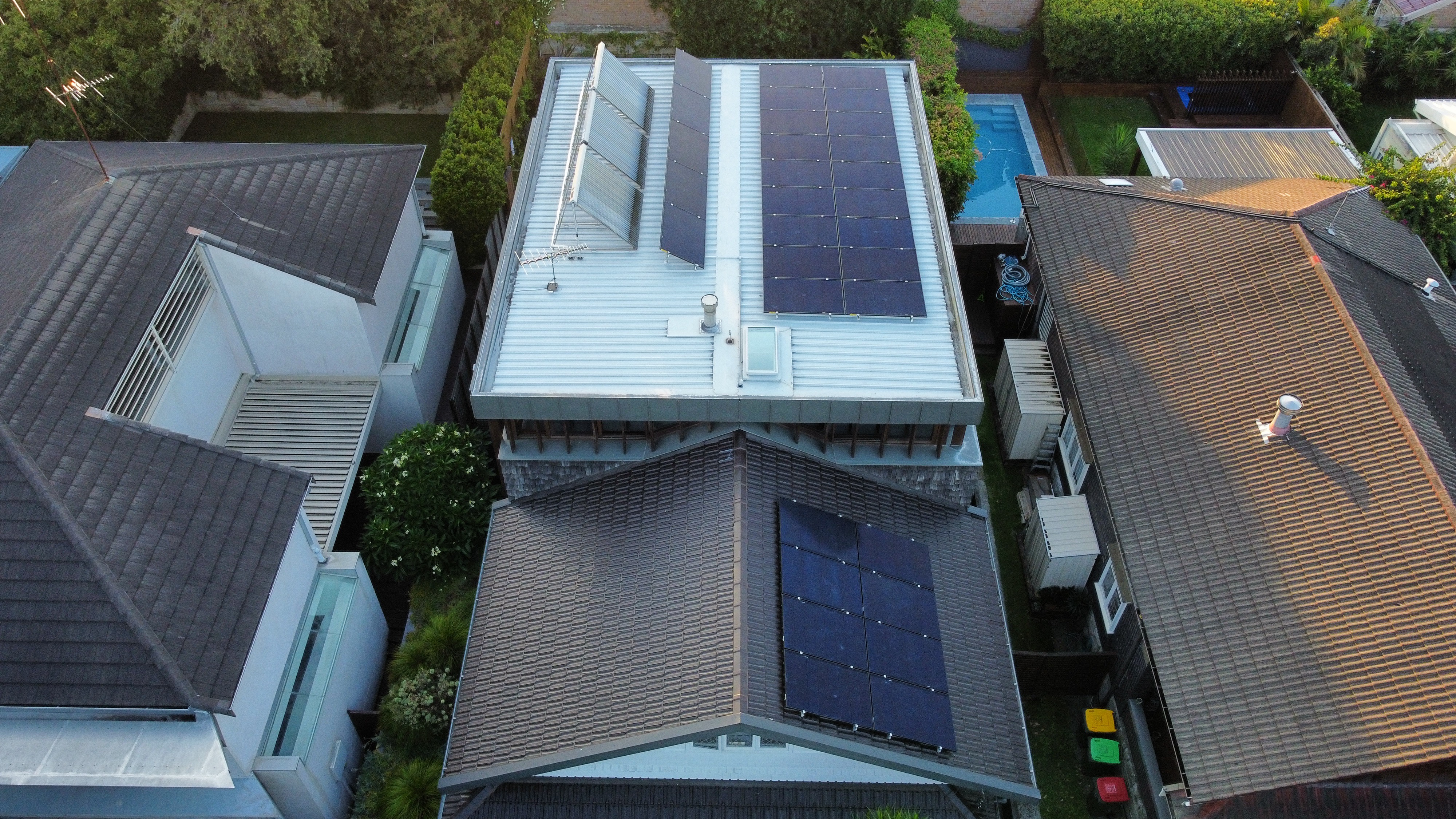
Heritage, conservation and strata properties can add approval conditions on top of AS/NZS 5139.
In a heritage conservation area, councils may limit equipment that is visible from the street. In a strata building, the owners corporation usually needs to approve anything fixed to common property, including external walls. It's worth checking both before you commit.
Smaller inner-Sydney blocks often call for some lateral thinking. A narrow terrace might offer a compact garage corner or a short stretch of side wall that clears the openings, but a side passage that doubles as the way out of the house counts as an escape route, so it is ruled out.
Our engineers assess each site individually, and every one of Guwing Green's bespoke installs is designed around what the property allows. We also check current requirements with your local network provider, whether that's Ausgrid, Endeavour Energy or Essential Energy.
What Happens When You Contact Guwing Green
Here's how an outdoor battery job usually runs with us, from the first conversation to installation day.
- Connect with an engineer. Use our contact page or call 1300 174 647, and an SAA-accredited engineer will be in touch within 24 hours.
- We size the battery. We work from 12 months of your smart meter data, so the battery fits your evening use rather than a package deal.
- We inspect the site. An engineer checks your walls, clearances, sun exposure and access, then recommends a location.
- You get a plain-English quote. Every line is explained, including the federal discount and your expected payback. If you'd like to finance the battery, we're an accredited vendor for Home Energy Saver loans through Plenti.
- We install and certify. SAA-accredited installers do the work, and you receive a Certificate of Compliance for Electrical Work.
FAQs
Can a solar battery go on a west-facing wall?
Yes, if the wall meets AS/NZS 5139, but it's usually the least preferred option. Penrith Lakes reached 48.9°C on 4 January 2020, the hottest temperature ever measured in the Sydney basin. That's well above the 40°C point where Tesla says Powerwall 3 may start de-rating, so a shaded south- or east-facing wall is the safer choice.
Does an outdoor battery need a cover or enclosure?
Not if it's outdoor-rated, but check the specific model first. Being on the Clean Energy Council's approved battery list tells you a battery meets Australian standards, but the datasheet is where you confirm its IP rating and temperature limits. A battery that isn't outdoor-rated must sit inside a compliant, ventilated enclosure, and any shade structure must not block ventilation or clearances.
Can a battery be mounted on a timber or weatherboard wall?
Yes, but if that wall backs onto a habitable room, it needs a non-combustible barrier behind the battery that extends past its sides and top. Since Amendment 1 to AS/NZS 5139 took effect in December 2025, exempt barrier materials must be at least 6mm thick. Your installer will confirm how far the barrier must extend for your install.
Can I install a solar battery myself?
No. In NSW, electrical wiring has to be done by a licensed electrician or under their supervision, and a battery install also has to meet AS/NZS 5139. To claim the federal discount, the installer must also hold SAA accreditation. Guwing Green's in-house team holds active SAA accreditation, and we issue a Certificate of Compliance for Electrical Work on every battery we install, as NSW requires.
Is Guwing Green approved for the Home Energy Saver loan and other battery schemes?
Guwing Green is listed as an accredited vendor in Plenti's Home Energy Saver directory, and we're a NETCC Approved Seller, which both Home Energy Saver lenders require. Every battery install is carried out by an SAA-accredited installer, which is what the federal Cheaper Home Batteries Program requires. The NSW Government's virtual power plant incentive is arranged through the VPP provider you choose, who checks your eligibility, so it is worth comparing providers once your battery is installed.
Is an Outdoor Battery the Right Fit for Your Home?
So, can solar batteries be installed outside? Yes, and for many Sydney homes an external wall is the most practical spot, provided the battery is outdoor-rated and the location meets AS/NZS 5139:2019, including the December 2025 amendment.
Shade, wall construction and clearances decide whether a particular spot works, and those are best judged on site rather than from a spec sheet.
That's the part we handle. Our SAA-accredited engineers will check your walls, clearances and sun exposure, size the battery from your meter data and quote it clearly. As an accredited vendor, we can also support a Home Energy Saver loan through Plenti if you're eligible.
If you're weighing up an outdoor wall against the garage, talk to our team for a battery proposal built around your home. The first conversation is with an engineer, with no obligation. You can also read more about our home solar and battery systems.
Filed under