
On 19 August 2026, the Australian Parliament passed the Treasury Laws Amendment (Tax Reform No. 2) Bill 2026 into law, permanently locking in the $20,000 instant asset write-off for Australian small businesses.
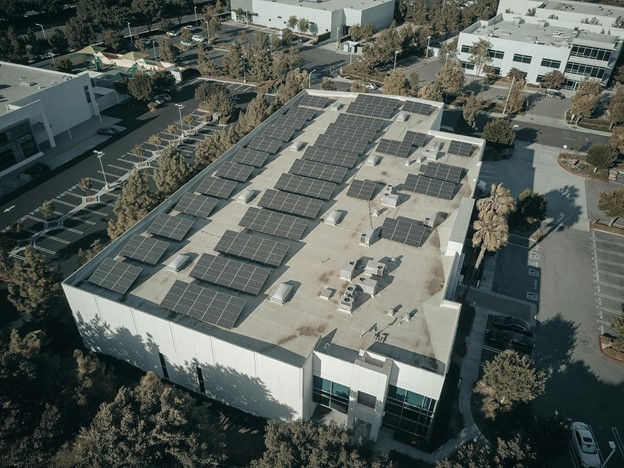
For a Sydney or NSW business owner looking to cut overheads, that changes how you account for energy investments. Eligible capital purchases can now be deducted immediately without racing a temporary deadline, and that includes commercial solar panels, inverters and battery storage.
Tax treatment always depends on your own business structure, so confirm any claim with a registered tax agent before lodging. What follows is how the rules interact with a solar project.
What the Instant Asset Write-Off Actually Does
The instant asset write-off is a deduction mechanism designed to simplify accounting and encourage capital investment. Instead of claiming depreciation across an asset's multi-year effective life, eligible entities claim a 100% deduction in the financial year the asset is first used or installed ready for use.
The $20,000 Threshold, and Who Qualifies
To access it, your business needs to meet Australian Taxation Office criteria. Aggregated annual turnover, including connected or affiliated entities, needs to sit under $10 million.
The $20,000 limit applies per asset, so you can write off several individual purchases in the same financial year as long as each one costs less than $20,000. How that limit is calculated comes down to GST registration: it is assessed on the GST-exclusive cost if you are registered, and the GST-inclusive cost if you are not.
New or Second-Hand, and What Does Not Qualify
The incentive applies equally to new hardware and second-hand equipment. The asset must be physically on site, commissioned and installed ready for use within the relevant income year. Paying a deposit or signing a purchase contract alone does not trigger the write-off.
Certain categories are explicitly excluded from the simplified depreciation framework, including trading stock, assets leased out more than 50% of the time, horticultural plants, and structural capital works under Division 43. Standard rooftop solar and battery equipment qualify as plant and equipment under Division 40.
It Is Now Permanent, Not a Deadline
For years, small business owners operated under annual extensions announced in Federal Budgets, with constant uncertainty around sunset dates. Most legacy guides still advise businesses to buy before 30 June. That deadline pressure no longer exists.
Schedule 2 of the Bill permanently embeds the $20,000 threshold into the tax code for businesses turning over under $10 million. Treasury estimates the permanent rule supports up to 4.1 million small businesses and delivers around $32 million in annual compliance-cost savings by removing the yearly legislative delay.
Without the change, the threshold was scheduled to drop back to its baseline default of $1,000, which would have forced medium-sized capital purchases into multi-year depreciation pools and delayed tax relief for growing companies.
The practical effect is simple. You can now plan energy upgrades around cash flow rather than around a tax deadline.
Does It Cover Solar Panels and Batteries?
Yes. Commercial solar panels, string inverters, microinverters and battery storage systems are classified as depreciating plant and equipment under Division 40.
How Solar and Battery Assets Are Classified
The ATO assigns solar energy equipment a standard effective life of 20 years under its capital allowance determinations. Under standard depreciation, a business claims a small percentage of the asset's value each year. The instant asset write-off lets qualifying small businesses bypass that 20-year schedule and deduct the total depreciable cost in year one.
What Cost Actually Means Once STCs Are Involved
Commercial solar prices are structured around government incentives. Small-scale Technology Certificates under the federal Renewable Energy Target act as a point-of-sale discount. The ATO evaluates the $20,000 threshold on your net out-of-pocket cost excluding GST, not the gross pre-rebate quote price.
| Item | Illustrative cost |
|---|---|
| Gross system equipment and installation | $24,500 |
| Less STC point-of-sale discount | -$6,000 |
| Net out-of-pocket cost (excl. GST) | $18,500 |
| Instant asset write-off status | Eligible for 100% year one write-off |
One change worth tracking: on 5 August 2026 the Australian Government announced a proposed expansion of the Small-scale Renewable Energy Scheme, lifting the system-size cap from 100kW to 1MW. The change is targeted to start from 1 October 2026 once the supporting regulations are finalised. Once in force it is expected to cut upfront installation costs for mid-sized commercial systems by roughly 20%, which could bring larger systems under the net $20,000 threshold.
What If Your System Costs More Than $20,000?
A system sized to offset heavy daytime manufacturing or refrigeration loads may well exceed the threshold. Exceeding $20,000 does not mean you lose the tax benefit.
The Small Business Depreciation Pool
Assets costing $20,000 or more go into the small business simplified depreciation pool. Under pool rules you claim a 15% deduction on the net asset cost in the first financial year, then 30% of the opening pool balance in each following year. Not an instant single-year deduction, but far faster relief than a 20-year depreciation table.
Solar and Battery as Separate Assets
When solar and battery storage are installed as distinct functional units with separate inverters and dedicated meters, they may qualify as separate depreciating assets.
A business installing a $16,000 net solar array alongside an $18,000 net AC-coupled battery has both items sitting under the $20,000 limit individually. Itemised separately on the invoice, both may qualify for 100% write-offs in the same financial year. Your accountant has to review the invoice structure to verify the components meet independent asset definitions under ATO guidelines.
Why Getting the Size Right Matters More Than Ever
Designing a commercial system around tax thresholds alone is a mistake. The return comes from matching generation to daytime load profiles and lowering exposure to rising NSW commercial electricity rates. Whether a system lands under or over $20,000 should be an engineering outcome, not a target.
Our SAA-accredited engineering team analyses 12 months of 30-minute interval meter data from your retailer before proposing a system size, so every kilowatt of capacity offsets active daytime consumption. For complex roof geometries, heritage properties or multi-site facilities, we design custom-engineered systems that account for roof space, connection limits and tax outcomes at the same time.
How to Claim It
Timing and Installation
To claim the deduction, the equipment has to be installed, commissioned and ready for use before the end of that financial year. A typical commercial installation takes 4 to 8 weeks from site audit to grid connection approval with the local distributor, whether that is Ausgrid, Endeavour Energy or Essential Energy. Planning the installation schedule is what keeps the system operational inside your target financial year.
Records to Keep
- Itemised tax invoice. An official invoice showing hardware cost, installation labour, GST, and the STC discount on its own separate line.
- Proof of commissioning date. Evidence showing the exact date the system was turned on and first used, such as a commissioning certificate or grid connection sign-off.
Guwing Green designs and installs the system, but tax treatment depends on your business setup. Always confirm your claim with a registered tax agent or accountant before lodging. Our energy audit process is a good way to prepare site documentation before requesting an engineering proposal.
Frequently Asked Questions
Is the instant asset write-off still available?
Yes. The $20,000 instant asset write-off was made permanent on 19 August 2026 under the Treasury Laws Amendment (Tax Reform No. 2) Bill 2026, for small businesses with aggregated annual turnover under $10 million.
Does the $20,000 threshold include GST?
If your business is registered for GST, the threshold applies to the GST-exclusive cost. If you are not registered, it applies to the total GST-inclusive cost.
Can I claim solar panels and a battery in the same year?
Yes, provided each asset costs less than $20,000 excluding GST and functions as a distinct, separately itemised unit. If solar and storage are supplied as a single bundled asset exceeding $20,000, the system goes into the small business depreciation pool.
Can sole traders and home-based businesses claim it?
Yes. Sole traders operating under an active ABN with turnover under $10 million can access the write-off. If a home-based business uses solar for both business and private purposes, you can only claim the taxable business-use percentage of the asset.
Is Guwing Green approved for other government finance schemes?
Yes. Alongside the write-off for business purchases, Guwing Green is approved to offer access to the NSW Home Energy Saver loan through Brighte and Plenti. If you are a business owner who is also a homeowner, eligible NSW households can access a zero-interest loan of up to $15,000 towards solar, battery and other approved home upgrades. It runs on separate eligibility rules to the write-off, so ask our team which option, or combination, fits your situation.
Planning the Upgrade Around Cash Flow
With the $20,000 instant asset write-off locked in as permanent law, small business owners can upgrade energy infrastructure without racing artificial deadlines.
Whether your system lands under the threshold or requires pool depreciation, the number that matters most is the reduction on your monthly power bill. Our SAA-accredited engineers size every system from 12 months of real interval data. Request a proposal and we will walk through the numbers with you.
Filed under