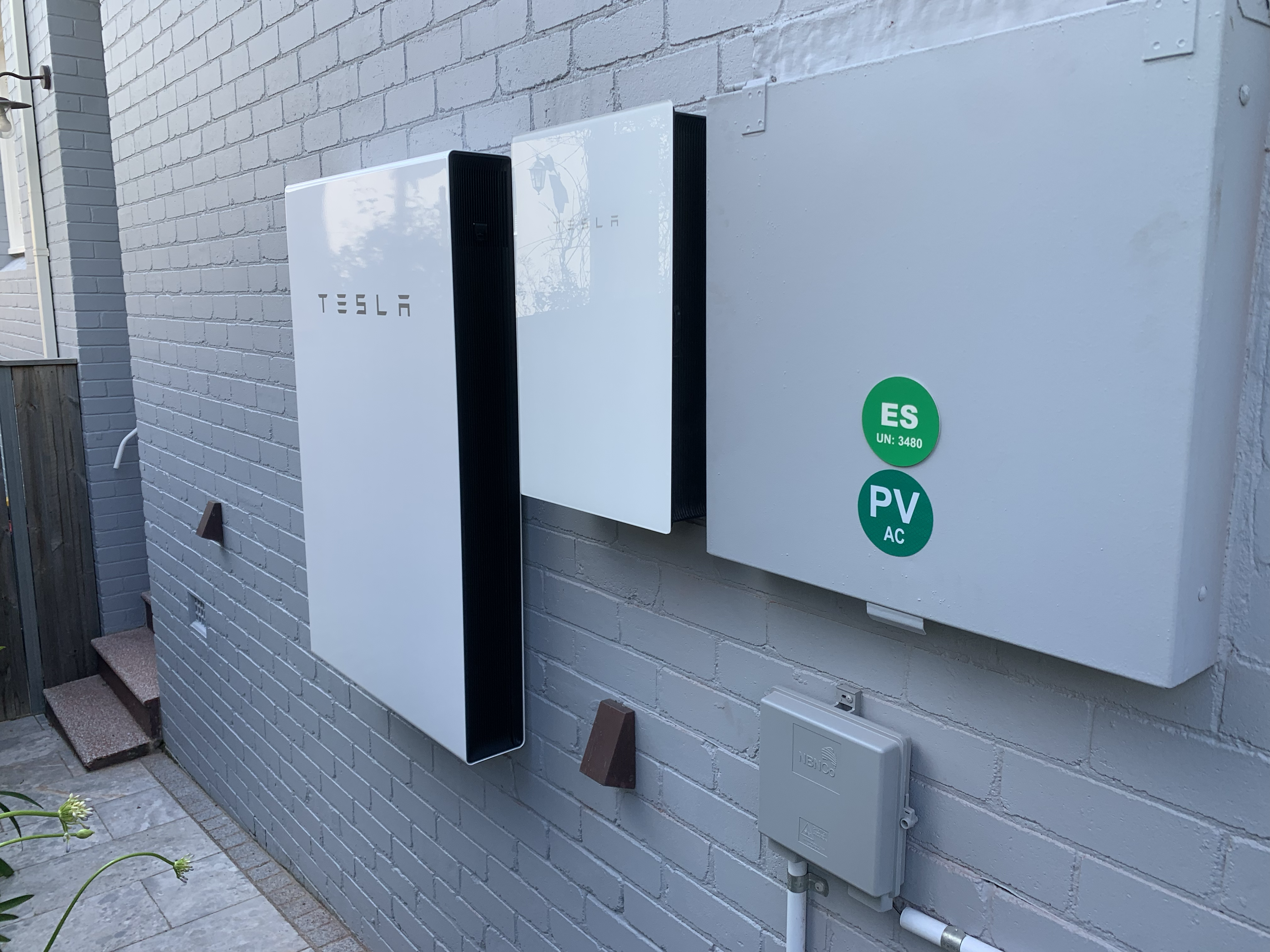

Seen the letters VPP turn up in your battery quotes, your network incentives and the government rebate paperwork?
VPP promises to turn your home battery into an active grid helper that earns extra credits on your electricity bill. However, many homeowners end up confused about what joining a VPP actually means for their day-to-day energy supply.
This guide covers what a VPP actually is, how it works, what you can realistically earn from one in Sydney, and how the NSW incentive fits in. If you already understand the concept and just want to compare programs, our guide to the best VPP providers in Australia does that instead.
What Is a Virtual Power Plant (VPP)?
A Virtual Power Plant (VPP) is a cloud-based network of decentralised energy systems, such as residential solar batteries, smart hot water units and electric vehicle chargers, linked together by specialised software.
Instead of building a single coal or gas-fired power station, a VPP operator coordinates thousands of individual home batteries across NSW so they can supply energy back to the grid in unison.
A VPP is not a physical piece of hardware installed in your garage. Your battery stays on your wall, powering your home as normal during typical days.
VPP-Capable Versus Joined to a VPP
One of the biggest sources of confusion for Australian homeowners is mixing up hardware capability with actual network enrolment. Here is the difference:
- VPP-capable (hardware requirement). Your battery unit and its inverter have the built-in smarts, digital protocols, and internet communication modules required to talk to an external energy network.
- Joined to a VPP (active choice). This is the voluntary agreement you sign with an electricity retailer or VPP provider to actively participate in energy sharing events in exchange for bill credits or cash payments.
Under the federal Cheaper Home Batteries Program, which has run since 1 July 2025, rules set by the Department of Climate Change, Energy, the Environment and Water require on-grid home batteries, including the inverter, to be VPP-capable to qualify for the national discount. Off-grid systems are exempt from that requirement. Actually joining a VPP is still entirely your call.
How Does a VPP Actually Work?
A VPP relies on real-time data streaming and automated grid management software to balance electricity demand.
The technology behind a VPP
Centralised software run by the VPP operator monitors local weather forecasts, wholesale electricity market spot prices, and overall grid stability every few seconds. To connect your home battery to this network, your installation requires three core technical components:
- A compatible battery inverter. An intelligent inverter listed on the Clean Energy Council approved product list that supports remote control protocols.
- A smart meter. A digital electricity meter installed at your main switchboard that measures bidirectional power flow between your home and the street grid.
- A reliable internet connection. An active Wi-Fi, Ethernet, or cellular connection so your battery can receive automated dispatch signals from your VPP manager.
While a single 10 kWh home battery cannot shift grid-wide demand on its own, thousands of residential batteries discharging together can inject megawatts of clean power into the grid within seconds.
What happens during a VPP event
When the local electricity network experiences extreme stress, such as during scorching summer afternoons when air-conditioning demand peaks, the VPP software initiates a dispatch event.
- Peak grid event triggered. The electricity network operator signals that high demand or high wholesale market prices are threatening grid stability in New South Wales.
- Remote dispatch command. The central VPP software sends an encrypted command over the internet to thousands of connected home batteries across the state.
- Automated power injection. Your battery automatically exports an agreed portion of its stored energy into the main grid, helping stabilise local voltage and offset high-emissions generators.
- Reserve limit reached. Dispatch stops when the event ends or your battery hits the reserve limit written into your plan. Most plans hold back around 20%, but this is set by the provider, not by law. Solar Choice notes that some plans can run a battery down to zero, so check the reserve before you sign anything.
- Financial reward credit. Your energy retailer or VPP manager logs the kilowatt-hours dispatched during the event and credits your electricity account according to your contract terms.
What Can You Actually Earn from a VPP?
Working out what VPP power is actually worth means looking past the headline marketing numbers to how the returns are worked out. VPP income is a secondary bill offset, not a standalone replacement for primary solar self-consumption.
The four ways VPPs reward homeowners
Depending on the retailer or provider operating in NSW, financial incentives are delivered through four main structures:
- Upfront battery discounts. A one-off discount applied directly to the purchase price of your battery equipment in exchange for signing a multi-year grid agreement.
- Fixed annual bill credits. Guaranteed credits applied to your quarterly electricity bills (for example, $20 to $40 per month) regardless of how often grid events occur.
- Per-event performance payments. Premium rates paid for every kilowatt-hour of energy your system exports during an active emergency dispatch window.
- Boosted or time-of-use feed-in tariffs. A lifted export rate for energy sent to the grid during the evening peak. Worth keeping in perspective: IPART's all-day feed-in benchmark for NSW in 2026-27 is only 3.4c to 6.5c per kWh, while its evening benchmarks run from 16.9c to 19.9c on Endeavour Energy and up to 33.3c on Essential Energy. Only a handful of retailers currently pay time-of-use export rates at all.
What actually determines your return
Your net earnings depend on local grid conditions, your battery's usable capacity, and the specific fine print of your plan.
| Factor | Impact on VPP return |
|---|---|
| Battery usable capacity | More usable capacity means more energy available to dispatch, which lifts both the upfront NSW incentive and your per-event earnings |
| Contract freedom | Flexible month-to-month plans often pay variable rates, whereas lock-in contracts provide fixed credits |
| Dispatch frequency | Regions with frequent summer heatwaves trigger more high-paying dispatch events each year |
| Retailer wholesale access | Direct wholesale access plans allow high event returns but expose households to fluctuating market rates |
For most Sydney households with a standard 10 kWh to 13.5 kWh battery, VPP participation delivers modest annual bill credits that supplement your daily solar savings.
The NSW VPP Incentive Explained
To accelerate clean energy adoption and reduce blackout risks, the NSW Government offers a dedicated financial incentive for connecting residential batteries to a VPP.
How the incentive works
Administered by NSW Climate and Energy Action under the Peak Demand Reduction Scheme (PDRS), the incentive is paid as a one-off upfront amount. NSW does not publish a fixed dollar figure.
What you get depends on your usable capacity and how much value your VPP provider passes through, and providers commonly advertise it as up to $1,500.
Treat up to $1,500 as a ceiling rather than a quote, and ask any provider to show you the per-kWh arithmetic in writing.
The payment is generated through Peak Reduction Certificates (PRCs) created when an eligible home battery is linked to an approved VPP network. Under updated PDRS rules published by the NSW Government:
- Capacity eligibility. From 1 July 2026, eligible battery sizes expanded to cover systems from more than 2 kWh up to 50 kWh, up from the previous 28 kWh ceiling.
- Calculation cap. While larger batteries up to 50 kWh can enrol, the upfront NSW financial incentive is calculated on the first 28 kWh of usable capacity.
- Rebate stacking. This state-level grid bonus stacks on top of national discounts under the Cheaper Home Batteries Program, so Sydney homeowners can claim both on the same battery.
- Program integration. The VPP bonus sits alongside broader initiatives within the NSW Home Energy Saver Program.
The NSW VPP incentive is claimed through approved scheme participants, such as Accredited Certificate Providers, when your installer or VPP provider commissions your battery system.
Watch the capacity rules, because they differ between the two schemes: the federal discount needs at least 5 kWh of usable capacity while the NSW incentive starts above 2 kWh, so a battery between 5 kWh and 50 kWh sits comfortably inside both.
Eligibility at a glance
To claim the NSW VPP incentive on your property, your setup must meet four criteria:
- Grid connection required. Your property must be connected to the main grid in NSW, as off-grid solar systems are not eligible.
- Approved VPP provider. You have to sign up with a VPP provider that actually offers this NSW incentive. Not every provider does, so ask before you commit.
- Compatible retailer. Your electricity plan must be hosted by a retailer capable of supporting VPP data sharing.
- One claim per NMI. The incentive can only be claimed once per National Metering Identifier. If a previous owner claimed it for your address, it cannot be claimed a second time.
What You Need to Join a VPP
Getting your property into a Virtual Power Plant means clearing three hurdles: technical, network and contractual. Before signing a VPP contract, confirm your property meets these four core prerequisites:
- Approved inverter hardware. Your solar or battery inverter must appear on the Clean Energy Council's approved product list and feature supported firmware.
- Digital smart metering. An operational interval smart meter capable of tracking half-hourly energy imports and exports.
- Distribution network approval. Formal grid connection approval from your local Sydney network distributor, such as Ausgrid, Endeavour Energy or Essential Energy.
- Reliable home Wi-Fi or cellular bridge. Strong signal strength at the battery installation site to prevent missing automated dispatch signals.
The 2026 federal rule worth knowing
There is an important line here between the federal hardware standard and your own decision to enrol. Under the Renewable Energy (Electricity) Regulations 2001, every new on-grid battery claiming federal STC discounts must be VPP-capable at installation.
That rule has applied since the program opened on 1 July 2025. What changed on 1 May 2026 was the size of the discount, not the VPP-capable requirement. This means your installer must supply hardware equipped with open communication protocols, even if you choose to operate your battery purely for private home storage without joining a VPP network.
Is a VPP Worth Joining?
Deciding to join a VPP comes down to weighing financial rewards against personal control over your solar energy.
The upside
- Extra value from owned assets. Earn extra income or bill credits from equipment already sitting on your wall.
- Automated hands-off operation. Software handles all grid trading and monitoring automatically in the background.
- Stacked state incentives. Claim the upfront NSW VPP incentive, commonly advertised at up to around $1,500, on top of the federal battery discount.
- Support local grid reliability. Discharging stored clean power during heatwaves helps lower overall network strain and reduce fossil-fuel reliance.
The trade-offs
- Increased battery cycling. Frequent grid dispatches add additional charge and discharge cycles, slightly accelerating normal battery degradation over a 10-year lifespan.
- Loss of total control. You delegate a portion of your stored solar energy to external software management.
- Variable financial yields. Per-event earnings fluctuate based on weather patterns and wholesale market volatility.
Get the Battery Sizing Right First
The most common mistake homeowners make is choosing a battery size purely to maximise VPP or government rebate payments.
Under federal rules updated on 1 May 2026, Small-scale Technology Certificates taper sharply above 14 kWh of usable capacity. The full STC factor applies to the first 14 kWh, drops to 60% for capacity between 14 and 28 kWh, then to 15% between 28 and 50 kWh. The NSW VPP incentive caps its financial calculation at 28 kWh of usable capacity, even for batteries up to 50 kWh.
| Usable battery capacity | Federal incentive | NSW VPP incentive |
|---|---|---|
| 0 to 14 kWh | Full STC factor (100%) | Eligible |
| Above 14 to 28 kWh | Reduced STC factor (60%) | Eligible, up to the calculation cap |
| Above 28 to 50 kWh | Further reduced STC factor (15%) | Capacity above the cap does not increase the NSW incentive |
Buying an oversized 30 kWh battery simply to maximise incentives can result in lower long-term value than installing a battery that closely matches your household's energy usage. Instead, battery size should be based on factors such as your overnight electricity consumption, rooftop solar generation, evening usage patterns, future electric vehicle charging plans, and backup power requirements.
Rather than recommending the largest battery that qualifies for an incentive, our SAA-accredited engineers analyse your historical electricity usage across different seasons to design a system that balances rebate eligibility with long-term financial performance. Before comparing quotes, it's also worth learning how to read a solar quote so you can clearly identify equipment costs, installation fees, and any government incentives already applied to the proposal.
Frequently Asked Questions
Do I have to join a VPP to get the battery rebate?
No. To claim the national rebate, your installed battery system must be VPP-capable, but actually connecting to a VPP provider is an optional decision made by the property owner.
Does a VPP void my battery warranty?
Generally no, but check your warranty terms before you enrol rather than after. Established manufacturers work with the major VPP operators so dispatch stays inside normal operating and cycle limits. Some warranties do cap total energy throughput, so confirm in writing that VPP participation will not void yours.
Can I leave a VPP if it's not working for me?
Yes, provided your contract allows it. Many modern VPP plans offer flexible month-to-month arrangements with no exit fees, though some upfront discount plans require remaining enrolled for a minimum specified term. Our comparison of VPP providers sets out which programs have lock-in terms.
How much can I really expect to earn in NSW?
For a typical 10 kWh battery, expect a modest ongoing bill credit on top of the one-off NSW incentive. Neither figure is fixed. The NSW payment is calculated on usable capacity up to 28 kWh and varies by provider, while ongoing earnings depend on your contract terms and how often dispatch events actually happen.
Can renters or off-grid properties join a VPP?
Off-grid properties cannot join a VPP or claim the NSW incentive because both require an active grid connection. Renters generally cannot sign up independently, as VPP agreements attach to the property meter and require owner consent.
Is Guwing Green an approved supplier for government energy schemes?
Yes. Guwing Green is an approved supplier under the NSW Home Energy Saver Program and other government initiatives. We can help you navigate these schemes and access qualifying energy upgrades through a single, accredited provider.
Conclusion
A Virtual Power Plant is a reasonable way to earn extra bill credits from a home battery, but it works best as a bonus on top of a well-sized system rather than the reason you buy one.
Correct system sizing based on your actual energy consumption remains the single most important factor in achieving long-term power independence.
Every government energy program has different technical requirements, approved products, and eligibility rules. Rather than trying to interpret them yourself, our SAA-accredited engineers can assess your property, recommend a compliant solar and battery system, and explain which rebates, VPP incentives, or government programs may apply. Request a no-obligation assessment to understand what's available for your home.
Filed under