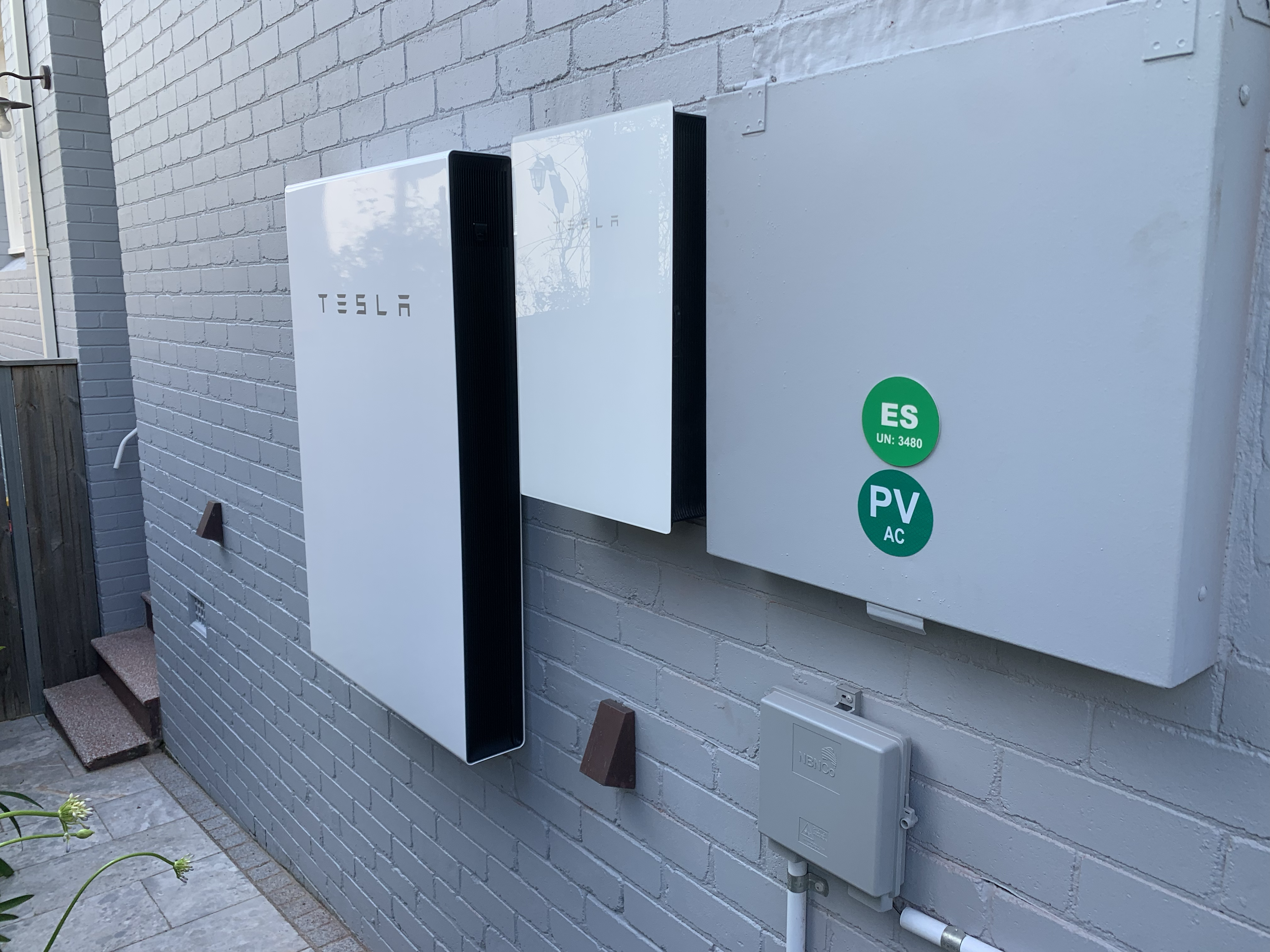
A hybrid inverter is a single unit that manages your solar panels and battery, rather than using a separate inverter for each.
It can send solar power to your home, charge the battery with excess generation, and manage what gets exported to the grid.
Your network operator sets a separate export limit on how much surplus solar you can send to the grid, and even within that limit, exported solar is worth relatively little on its own: the IPART benchmark for 2026-27 sits at 3.4 to 6.5 cents per kilowatt-hour for solar exports in NSW.
When surplus solar earns relatively little from the grid, is a solar battery worth it? To answer that, you first need to know how a hybrid inverter works and what it does with the electricity your solar system produces.
What Does a Hybrid Inverter Actually Do?
A hybrid inverter handles the main electrical jobs in a solar and battery system from one unit. It converts solar power for use in your home, manages battery charging and discharging, and controls where excess electricity goes.
Here is a look at how power moves through a hybrid system during the day and night:
- Daytime Solar Generation. Sunlight hits your solar panels, producing DC electricity. The power travels from the panels to the hybrid inverter.
- Solar Power Conversion. The hybrid inverter converts the solar panels' DC electricity into AC electricity that your home can use. Your appliances can then draw power from the solar system as they normally would.
- Charging the Battery. When your panels produce more electricity than your home is using, the surplus can flow into the battery. Because the solar panels and battery are connected on the DC side, the solar power can be stored without first going through a separate solar inverter and then another battery inverter.
- Exporting Surplus Solar. A battery that has reached its configured charge level leaves any remaining solar power available for export to the grid. How much you can export depends on your connection and the applicable export limit.
- Evening Battery Discharge. As solar generation drops or stops, the hybrid inverter draws stored energy from the battery and converts it into AC electricity for your home. Your stored solar can then power household loads after the sun goes down.
How Excess Daytime Energy Is Managed
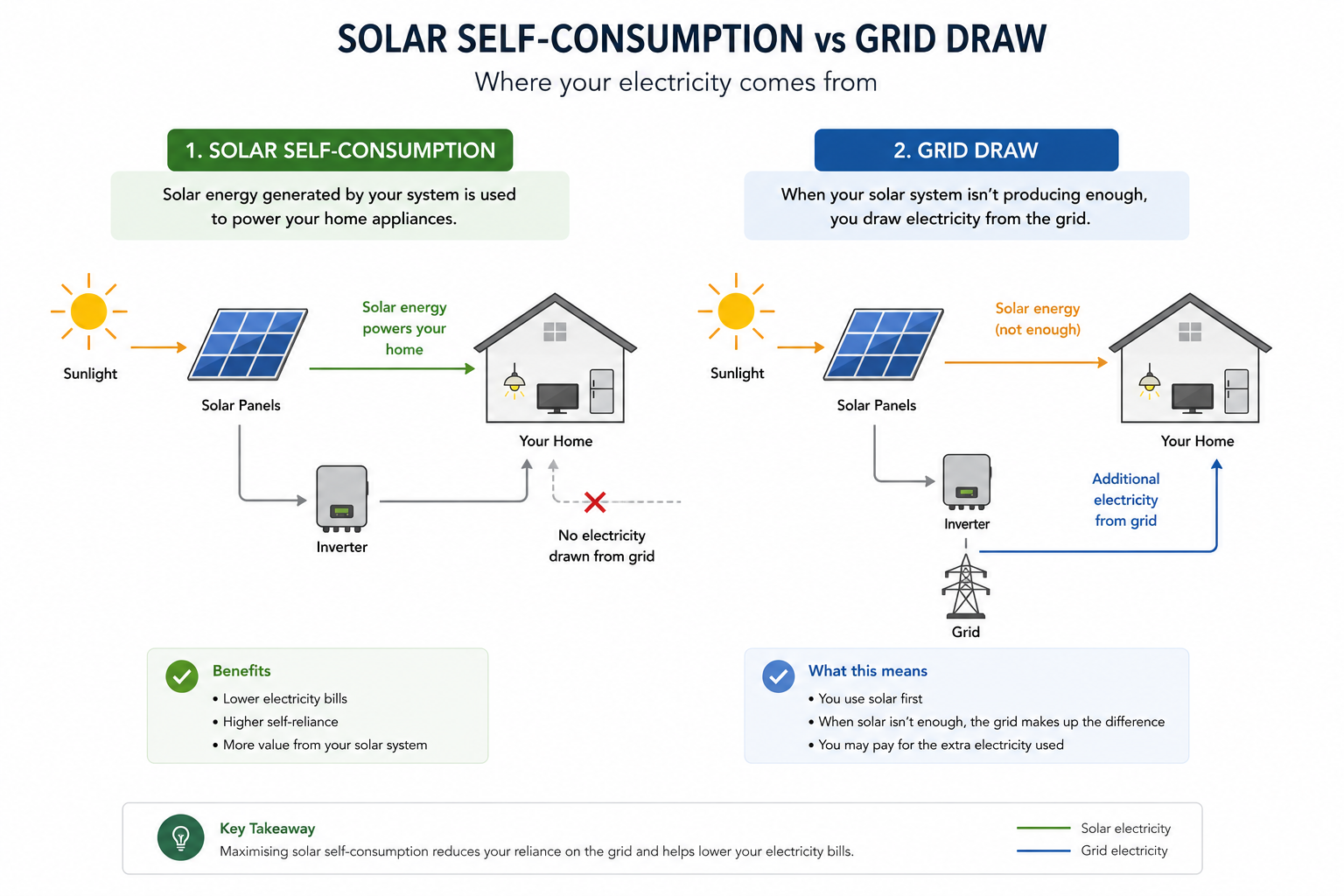
Most hybrid systems follow a simple order when solar panels are generating power:
- Power the Home. Solar generation first supplies the electricity your appliances are using.
- Charge the Battery. Any excess solar goes toward charging the battery.
- Export the Surplus. Once the battery reaches its configured charge level, remaining solar can go to the grid, subject to your export limit.
The exact order is not fixed for every system. Depending on the inverter and its operating mode, you may be able to change settings in the monitoring app.
For example, you could prioritise charging the battery over exporting electricity or reserve stored energy for later in the day.
Why Hybrid Inverters Use DC Coupling
A hybrid system typically uses DC coupling, which means the solar panels and battery connect to the same inverter on the DC side.
Every conversion carries some loss. Australian Government guidance notes that charging and discharging a lithium-ion battery typically loses around 10% of the stored energy, on top of the small difference between a battery's rated and usable capacity.
A DC coupled hybrid system avoids one of those conversion stages, since solar power can flow from the panels to the battery without first being converted to AC.
The fewer conversion stages involved, the less energy is lost along the way, although the exact difference depends on the specific inverter and battery installed.
An AC coupled battery takes a different approach. It works alongside your existing solar inverter, with a separate battery inverter handling the battery.
This is why AC coupling is a practical option when you already have solar installed and want to add storage without replacing the original solar inverter.
Hybrid Inverter vs Standard String Inverter vs AC-Coupled Battery
All three do the core job of turning DC solar power into AC electricity your home can use. Where they differ is battery handling:
- Standard String Inverter. Converts solar to AC and exports the rest. It has no battery control, so adding storage later means fitting a separate inverter for it.
- Hybrid Inverter. Does the same solar conversion job, but with native battery management built in. It is battery ready from day one, whether or not the battery goes in straight away.
- AC Coupled Battery. Not a different inverter type so much as an add on. It connects a second inverter box alongside an existing string inverter rather than replacing it, the more common retrofit path for homes that already have solar.
Which One Should You Choose?
| What to Compare | Standard String Inverter | Hybrid Inverter | AC Coupled Battery |
|---|---|---|---|
| Converts Solar DC to AC | Yes | Yes | Yes, via the existing string inverter |
| Manages a Battery | No | Yes, built in | Yes, via a second inverter |
| Best Suited For | Solar only, no battery planned | Solar and battery installed together | Adding storage to solar already installed |
| Requires Replacing Existing Inverter | N/A | Usually, if retrofitting | No |
| Inverter Units on the Wall | One | One | Two |
The right choice depends on what is already installed, not which option is best overall.
If you are installing solar for the first time, you can choose between a standard string inverter and a hybrid. If you already have working solar, however, you can either replace the existing inverter with a hybrid or add an AC coupled battery.
Either way, sizing your solar battery to household usage comes first, then the inverter setup follows from that.
Do You Need a Hybrid Inverter If You Don't Have a Battery Yet?
Not necessarily. The main reason to choose a hybrid inverter before buying a battery is future planning.
If you expect to add storage within the next few years, installing the hybrid inverter upfront means you do not have to replace your solar inverter when the battery is added.
The trade-off is the higher upfront cost. A standard string inverter can be the more economical choice when battery storage is not part of your realistic plans. Paying extra for battery capability years before you use it may not make sense if adding a battery is only a possibility.
As we explained earlier, the right inverter setup depends on the system you are building and what you plan to add later.
Guwing Green factors future battery installation into the initial design of every custom-designed solar and battery system, so you're not paying for hybrid capability you'll never use.
If battery storage is unlikely to feature in your plans, a standard string inverter can handle the solar system without the added battery functionality.
Backup Power: What a Hybrid Inverter Can and Can't Do in a Blackout
This is one of the most commonly misunderstood parts of a hybrid inverter. Having a hybrid inverter does not automatically mean your home will keep running during a blackout.
Grid-connected solar systems, including systems with hybrid inverters, must disconnect from the electricity network when the grid goes down.
The safety mechanism is called anti-islanding. It prevents your solar system from sending electricity into network lines while crews may be working on them.
A solar system therefore cannot simply keep powering your home as normal during an outage.
What You Need for Backup Power
Backup power requires a system that can disconnect your property from the grid and supply electricity independently. A suitable battery system can do this, but not every battery installation has backup capability.
Depending on the equipment and system design, backup can cover:
- The Whole Property. The system supplies power throughout the home, subject to its capacity and configuration.
- Selected Circuits. Essential loads such as refrigeration, lighting or water pumps can receive backup while larger loads remain disconnected.
- One Phase. Homes with a three-phase supply may have backup available on only one phase, depending on the system.
An islandable solar and battery system can also continue using solar generation to charge the battery during a blackout, potentially extending backup time when electricity use is managed carefully.
Check the Backup Setup Before Installation
Backup performance varies between systems, so do not assume a hybrid inverter will provide the same blackout protection as another model.
Tell us your backup priorities during your energy audit and we will design around them from the start, rather than checking afterwards whether the system you already bought can do it.
Either way, you should check whether the specific system:
- Can provide backup power during a grid outage
- Supports the circuits you want to keep running
- Can use solar to recharge the battery during an outage
- Has enough battery capacity and inverter output for your essential loads
- Has any interruption when switching from grid power to backup
The Australian Government notes that you may need to manage your electricity use during an outage to avoid overloading the battery inverter.
If blackout protection is important to you, include those requirements when the system is designed and confirm exactly what will stay powered during an outage.
Is a Hybrid Inverter CEC-Approved, and Who Can Install One in NSW?
There are two separate checks here: the inverter product and the person installing it.
The inverter needs to appear on the CEC approved products list to meet the product eligibility requirements for STCs under the Australian Government's Small-scale Renewable Energy Scheme.
Grid-connected inverters also need to comply with AS/NZS 4777.2, the Australian standard covering inverter requirements for connection to the grid.
The installer and system designer are a separate issue. In NSW, solar systems must be installed by a licensed, SAA-accredited installer.
The accreditation scheme transitioned from the Clean Energy Council to Solar Accreditation Australia in May 2024, so "CEC-accredited installer" is outdated terminology.
Before signing a quote, check the inverter model on the CEC approved products list and confirm the installer's current SAA accreditation.
Guwing Green's in-house team holds active SAA accreditation, and we'll check both automatically as a standard part of every quote we prepare.
What Affects the Cost of a Hybrid Inverter?
The inverter itself is only part of the installation cost. The property's electrical supply, system size, battery setup and backup requirements can all change what you need.
- Inverter Capacity. Higher-capacity models generally cost more because they can handle a larger solar array and higher household loads.
- Single-Phase vs Three-Phase. Three-phase models can cost more than single-phase models. The property's electrical configuration also determines which inverter options are suitable.
- Brand and Model. Different manufacturers price their inverters differently, based on specifications, features, warranty and product range.
- Battery Compatibility and Features. Some hybrid inverters support specific battery types, backup functions or additional operating modes. More capable models can carry a higher price.
- Installation Requirements. The final cost is not just the inverter itself. Labour, switchboard work, rewiring and other electrical work can add to the installation price, particularly when retrofitting an existing solar system.
If the upfront cost is the main hesitation, government finance can help spread it. See the FAQ below on using the NSW Home Energy Saver program for a hybrid inverter upgrade.
Rather than comparing inverter prices alone, look at the cost of the complete system and how it is expected to perform.
For battery storage, the solar battery payback period is a more useful figure for assessing the financial side of the decision.
The Australian solar and battery calculator, known as SunSPOT, can estimate installation cost, savings and payback for solar and battery systems.
FAQ About Hybrid Inverters
Can I add a battery later without replacing my hybrid inverter?
Usually, yes. Most hybrid inverters are designed to accept a battery after installation, provided the battery brand is on the inverter's compatibility list. Check the inverter's approved battery compatibility before installation, as not every hybrid inverter works with every battery.
Can the NSW Home Energy Saver program help pay for a hybrid inverter?
Yes, if the hybrid inverter is part of a new solar or battery installation. The NSW Government's Home Energy Saver program offers eligible households a zero-interest loan of up to $15,000, repayable over up to 10 years, to cover upgrades including rooftop solar and home batteries. A discount of up to $4,000 is also available for eligible lower-income households. Guwing Green is a NETCC Approved Seller, the accreditation both Brighte and Plenti require of installers in their Home Energy Saver networks, and we're approved to offer access to the loan through both of them. Ask our team to check your eligibility when you get a quote.
Is a hybrid inverter the same as an off-grid inverter?
No. A hybrid inverter is grid-connected and disconnects during outages under anti-islanding rules, unless it has specific backup capability. An off-grid inverter runs independently of the network entirely, with no grid connection at all. Off-grid systems are rare in NSW and typically only used in remote areas without grid access.
Do I need a three-phase hybrid inverter for my home?
Only if your property has a three-phase electrical supply and you need the higher power capacity it provides. Single-phase properties require a single-phase inverter. Three-phase properties can use either, depending on system size and household load. Your installer can confirm what your existing supply requires.
What's the difference between a hybrid inverter and an AC-coupled battery?
A hybrid inverter can connect solar and a battery through the same inverter. An AC-coupled battery uses a separate battery inverter alongside the existing solar inverter. AC coupling can therefore add storage without replacing a working solar inverter.
Is a Hybrid Inverter Worth Considering for Your Home?
A hybrid inverter connects solar generation and battery storage in one system, but the right setup depends on your household usage, electrical supply, battery plans and backup requirements. Understanding what a hybrid inverter does is only the starting point.
At Guwing Green, our SAA-accredited team checks your actual electrical supply, export limit and household usage before recommending a system, not a generic package.
If you are weighing up a hybrid inverter against an AC coupled retrofit, talk to our team for a proposal built around your home.
Filed under