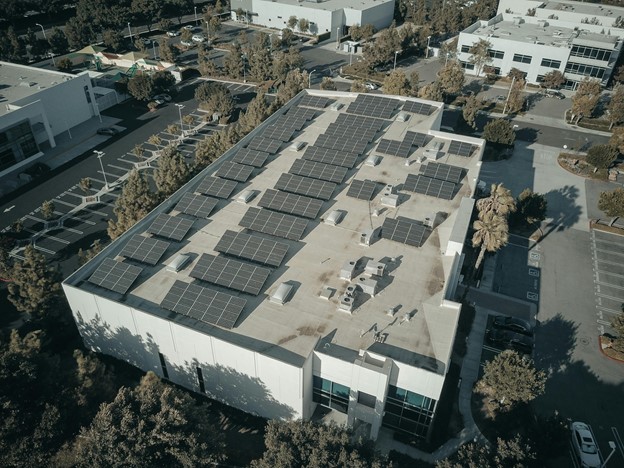
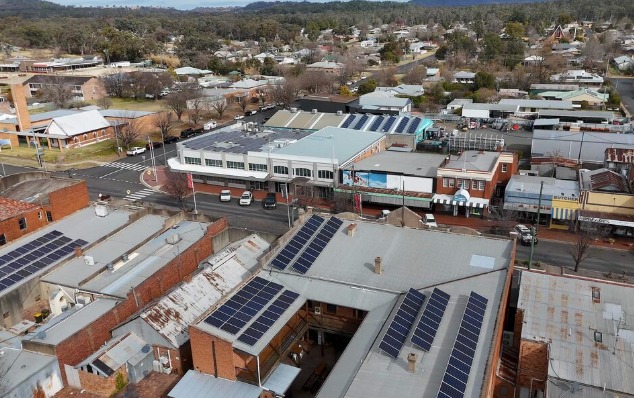
For most NSW business roofs, a good-quality n-type monocrystalline panel is the safe pick, and TOPCon is the cell design you'll see on most quotes right now.
Our engineers tell every business owner who asks the same thing: the panel type is rarely what makes or breaks a commercial solar project.
Your roof, when your business uses power, the network approval and who stands behind the warranty usually matter more. That's why we start with your electricity data and your roof, then choose a panel to suit. Our guide to commercial solar power covers the bigger picture.
If words like TOPCon or bifacial sound like jargon right now, that's fine. We'll go through them one at a time, so you know exactly what to ask when the quotes land on your desk.
Which Panel Type Suits Which Job
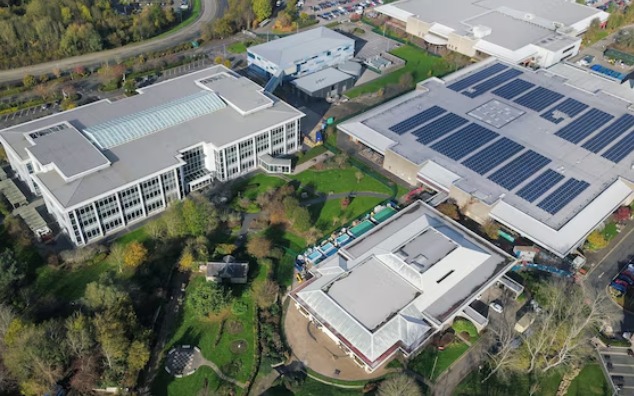
If you only read one part of this post, make it this table.
| Panel type | Best for | Watch out for |
|---|---|---|
| n-type TOPCon monocrystalline | Most commercial roofs. | Price and warranty terms vary a lot between brands, so compare price per watt and who backs the warranty. |
| Back-contact or heterojunction (HJT) monocrystalline | Smaller roofs where every square metre counts. | They can cost more, so weigh that against the roof space you save. And ask who backs the warranty in Australia. |
| Bifacial | Raised frames, carports and ground mounts over a light surface. | The bonus depends on how reflective the surface is, and it shrinks as the surface gets dirty or mossy. |
| Lightweight | Roofs that can't carry standard glass panels. | They can cost more than standard panels and still need a structural engineer's sign-off. Check the exact model is on the Clean Energy Council approved list so the system can still claim STCs. |
Notice something? Most of the "watch out" column is not about the panel at all. It's about your roof, your budget and who's backing the product.
The panel is only half the story. The other half is commercial solar designed around your load, which means matching the system to when your business actually uses power and how much of that your roof can cover.
Main Types of Commercial Solar Panels
Every type has trade-offs, and most of them only matter in specific situations.
Monocrystalline vs polycrystalline
The Fraunhofer ISE Photovoltaics Report (updated July 2026) shows the market is dominated by crystalline silicon and n-type TOPCon, and polycrystalline has all but disappeared from production. In practice, any new panel quoted for your roof will almost certainly be monocrystalline.
Commercial silicon panels have also climbed from about 17% efficiency to just under 25% over the past ten years.
Many modern mono panels also use half-cut cells, which can help a little when part of the array is shaded. If you're curious about the full backstory, our guide on monocrystalline vs polycrystalline covers it.
Thin-film panels
Thin-film makes up only about 2 to 3% of world production, according to Fraunhofer ISE. Its best commercial modules reach almost 20% efficiency, while the best silicon panels reach just under 25%, so you'd need more roof to get the same output.
Here's a myth we hear a lot: "My roof's a bit weak, so thin-film must be the answer, right?" Not quite, actually. If weight is your worry, lightweight panels (we'll get to them shortly) are the better place to look.
PERC, TOPCon, HJT and back-contact: what the labels mean
They're all different cell designs inside a monocrystalline panel and may appear on your quotes and datasheets. Here's what each one means in plain English:
- PERC. TaiyangNews's analysis of its monthly top modules list (January 2024 to June 2026) shows PERC's share declining from 44% to 24% as older products are phased out. You can still buy it, but it's on its way out.
- TOPCon. TOPCon is now the dominant cell design. In H1 2026, a TOPCon module passed 24% efficiency for the first time in TaiyangNews's ranking, while the best PERC module on the list reached 21.6%. Prices vary by brand, so compare price per watt, not just the efficiency figure.
- HJT (heterojunction) and back-contact. In the same ranking, back-contact modules from AIKO and LONGi hit 25% efficiency, the first time any product on the list reached that level, and the best HJT module reached 23.8%. They're worth a look when your roof is small and every square metre has to work hard.
Bifacial (dual-sided) panels
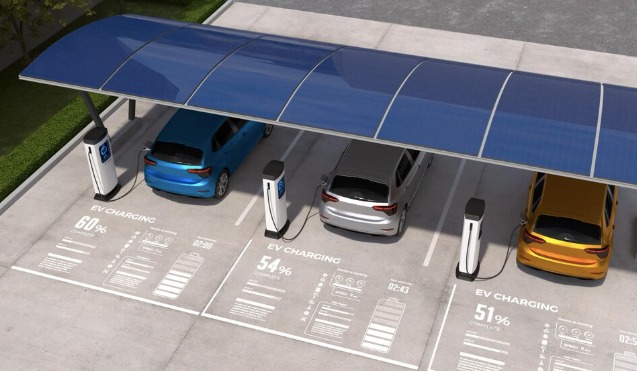
Bifacial panels catch sunlight on the front like any panel, but they also pick up light that bounces off the surface below and hits the back. That sounds like free energy, but the real-world gain is usually modest.
Research from IEA PVPS Task 13 found that the biggest factors are how reflective the ground is and how well the panel's back side works. The extra output also grows with mounting height, row spacing and gaps between panels. Even on big solar farm trackers over normal ground, the bonus is usually under 10%.
So where do bifacial panels actually shine? It's raised structures like carports, or tilted frames over a light surface. Our guide to bifacial solar panels goes deeper on Australian conditions.
Lightweight panels
Lightweight panels usually swap the glass front for tough plastic over silicon cells, so they weigh far less than a standard panel. They're the go-to option for some commercial roofs that simply can't carry the extra load of glass.
Whichever type you choose, it needs to be on the Clean Energy Council approved list for the system to qualify for STCs, so it pays to check lightweight models early.
What Actually Decides the Right Panel for Your Roof
After years of commercial jobs, our engineers boil it down to three simple questions. Is the panel reliable? Does it suit how your building uses power? And does it fit your budget?
Roof space and efficiency
Efficiency only really matters when you're running out of roof. To see why, try some quick maths. Panels are rated using a standard lab figure of 1,000 W of sunlight per square metre.
So a 100 kW system needs about 455 m² of panels at 22% efficiency and about 417 m² at 24%. That's roughly 38 m² saved, before you add walkways, gaps and row spacing.
Now ask yourself whether 38 m² is a big deal on your roof. On a huge warehouse with space to spare, probably not, and price per watt usually matters more there. On a small shopfront or a roof crowded with vents and skylights, that 38 m² could decide whether the system fits at all.
Heat and the temperature coefficient
Solar panels are a bit like the rest of us, in that they don't love working in the heat. Once a panel warms up past the 25°C used for lab ratings, it loses a little output. How much it loses is printed on the datasheet as the "temperature coefficient".
The closer that number is to zero, the better the panel handles a hot Sydney roof in January. The figure differs from product to product, so don't go by the cell type on the label. Ask for the temperature coefficient in every quote and compare the actual numbers side by side.
Roof structure, age and asbestos
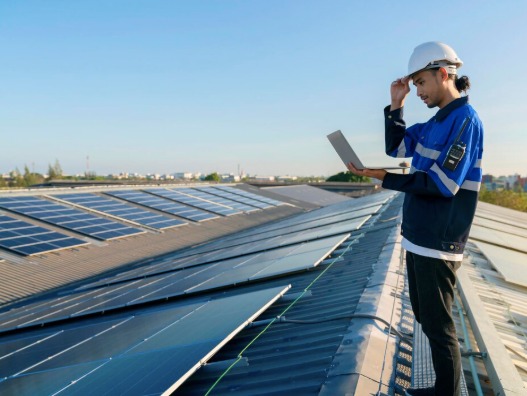
Before anyone talks about panel brands, your roof needs to be able to carry the weight. That means a structural engineering certificate from an engineer who has actually climbed up and looked at your roof, not someone who's only seen photos.
Our site assessment includes a structural audit, so you'll find out early whether your roof suits standard panels or needs a lighter option.
The age of your building matters too, because buildings built before 1990 are likely to contain asbestos. Any workplace built before 2004 should also have an asbestos register, so ask to see it before any work starts.
The NSW Government asbestos site says that if asbestos has to come out, you should use a licensed removalist, and SafeWork NSW says a licensed professional is legally required for any friable asbestos or more than 10 m² of bonded asbestos.
Got a heritage building or an unusual roof? Our team handles those, and lightweight panels might come into the picture.
Hail and storm durability
Every panel certified to IEC 61215 passes the same baseline hail test: a 25 mm ice ball fired at 23 m/s at 11 spots on the panel. Think of that as the minimum pass mark, not a promise it'll survive any storm.
Some panels are tested with bigger ice balls, and our guide on how solar panels are tested for hail explains those tougher ratings.
While you're at it, check your panel warranty wording and your building insurance for storm and hail cover, so you know who pays if the worst happens.
Warranty and manufacturer backing
Warranties trip a lot of people up, because there are actually two of them:
- Product warranty: covers faults in the materials or how the panel was made. It comes from the manufacturer, and the length varies a lot, from around 10 years up to 25 or more on some premium panels.
- Performance warranty: promises how much output the panel will keep over the years. Around 25 years is the industry norm.
The question that matters most is a simple one: if something goes wrong, who will honour the warranty here in Australia?
Our guide to what a solar warranty covers explains what to look for. We also factor warranty support into every equipment choice and back our own installation work with a workmanship warranty.
How Guwing Green Helps You Choose the Right Panel
At Guwing Green, we're not tied to any one manufacturer, so we choose equipment to suit your site rather than a brand we happen to sell. Our commercial systems range from 15 kW to 5 MW, and our projects follow three steps:
- Energy analysis. You send us twelve months of interval meter data, and we analyse it to find your usage patterns and demand spikes. This usually takes one to three days.
- Design and financial modelling. Our SAA-accredited engineers design a system around your load, your roof and your electricity distributor's connection rules, then choose panels that suit the site. Your proposal sets out the system design, component specifications, expected performance, savings, payback and available STC incentives, so you can see every figure before you proceed.
- Connection and installation. We handle the grid connection application with your electricity distributor. Once it's approved, we aim to install within two to four weeks, then test, commission and set up monitoring.
We're SAA-accredited, a NETCC Approved Seller and an approved vendor in Plenti's Home Energy Saver vendor directory (more on that in the FAQs below).
FAQs
Still got questions? These are the questions business owners ask us most.
Which solar panel is best for industrial use?
Same thinking as commercial: your roof, your power use and your approvals matter more than the panel label. For most industrial roofs, a good n-type monocrystalline panel (usually TOPCon) is a sensible place to start. Industrial sites tend to have bigger roofs, so price per watt, roof strength and ground-mount options come up more often.
Is there a difference between residential and commercial solar panels?
Smaller business systems often use the very same panels and inverters you'd find on a house. Larger commercial roofs can use bigger panels, since space is less of a squeeze and fewer panels can mean a quicker install. The real differences are in the mounting, the size of the system, the network approval and the incentives you can claim. For example, since 1 October 2026, eligible systems up to 1 MW can claim STCs, up from the old 100 kW limit.
Are solar panels worth it for commercial buildings?
Often, yes, especially if your business does most of its work during the day, because power you use on site is power you don't buy from the grid. The only way to know for sure is to model your own electricity data, which is what our engineers do before you commit to anything.
How long do commercial solar panels last?
Most quality panels come with a performance warranty of around 25 years. How long yours lasts in practice depends on installation quality, heat and maintenance. Our article on how long solar panels last covers what affects lifespan in the real world.
Do I need council approval for solar on my business roof?
It depends on your site. Many rooftop systems in NSW can go ahead as exempt development or complying development, which means you don't need a full development application. Heritage listings and other site conditions can change that. The NSW Planning Portal sets out the rules, and your council can confirm what applies to your property.
Does my solar system need network approval?
Yes. In Sydney, your network operator, such as Ausgrid or Endeavour Energy, has to approve the connection before your system is switched on, and larger systems need a technical assessment. We can handle the connection application for you and design the system around your network's requirements, including any export limits.
Can my business claim government incentives for solar?
Often, yes. Since 1 October 2026, eligible solar systems up to 1 MW can claim Small-scale Technology Certificates (STCs), up from the old 100 kW limit. The Clean Energy Regulator says the panels need to be on the Clean Energy Council approved list and the install has to follow Solar Accreditation Australia (SAA) guidelines, and that STC applications for these larger systems open in mid to late November 2026. We model the available STC value in every commercial proposal. We also work with finance providers including Brighte, Plenti and Solaris Finance on commercial green loans, subject to each lender's approval.
Is Guwing Green an approved provider for schemes like Home Energy Saver?
Yes, for households. Guwing Green is a NETCC Approved Seller and an approved vendor in Plenti's Home Energy Saver vendor directory, so eligible NSW households can use the NSW Government's Home Energy Saver loan (zero interest, up to $15,000) for solar and battery upgrades with us. The program covers homeowners and landlords with a combined household income of up to $210,000, so it won't fund a commercial system. For your business, we apply the STC value as an upfront benefit where it applies and can talk you through commercial green loan options.
Conclusion
So which type of solar panel is best for commercial use? For most commercial roofs in NSW, a good-quality n-type monocrystalline panel is the safe choice. The real answer comes from looking at your own roof alongside your own electricity use. That's exactly what we do at Guwing Green before we recommend a single panel.
Not sure which panel type suits your roof?
Our SAA-accredited engineers can design every commercial system around your building and your electricity use. Send us twelve months of meter data and we'll show you what fits, with every figure on the quote.
See how commercial solar for your business works, request a commercial proposal, or call our engineer on 1300 174 647.
Filed under