Storm damage to a solar system is rarely as obvious as a cracked panel. NSW storm season falls between September and April, according to the NSW SES, and solar panel hail damage can range from shattered glass to hairline fractures that go unnoticed until system output falls.
The extent of damage depends on factors such as hail size, the panel's tested hail resistance, impact conditions, and whether the system has been inspected after the storm.
Knowing what to look for can make it easier to decide whether a system needs further assessment.
This guide covers how panels are tested for hail, what damage can look like, what to do after a storm, and who may pay for repairs. It draws on the engineer-led approach Guwing Green brings to every inspection and quote.
Can Hail Damage Solar Panels?
Here is the short answer: yes, but most panels come through a storm intact. The tempered glass on the front of every panel is built to take a real hit, which is why most systems walk away from a storm without a mark.
Severe hail can still crack the glass, dent the frame and damage the cells beneath. Some storms go beyond what any panel is built for. Hail up to 160mm has fallen in parts of Australia, and some storms produce stones no panel could reasonably survive.
This is not hypothetical. The Insurance Council of Australia (ICA) declared a formal Insurance Catastrophe covering every postcode across Queensland and NSW for the severe storms and hail that hit between 20 and 27 November 2025.
By April 2026, that single event had climbed to almost 93,000 claims worth $1.78 billion, making it the costliest weather event of the year.
Severe hail can cause serious damage, but it is a risk to plan for when considering how long solar panels last under normal operating conditions.
Dr Tim Raupach from UNSW, who researches hail risk under climate change, makes a similar point: the response should focus on strengthening cities against changing hail risks while continuing investment in renewables.
How Much Hail Risk Does Sydney Really Have?
Sydney has a long history of severe hail. The 1999 Sydney hailstorm remains the costliest natural disaster in Australian insurance history, causing $1.7 billion in insured losses at the time.
The event also struck outside what was then considered the official storm season, prompting insurers to reconsider how that season should be defined.
NSW has continued to experience storm and hail events since then. ICA declared a Significant Event for the Hunter and Central Coast regions after a hailstorm on 26 May 2023, and again for severe storms across the Hawkesbury-Nepean and Illawarra regions in April 2024.
The potential exposure has also increased. Greater Sydney's population has grown by more than 1.3 million people since 1999, while dwelling numbers have risen by around 30%.
A storm of similar scale today could therefore affect far more rooftops, including the growing number fitted with solar panels. Long-term insurance data reinforces this scale, showing that hail accounted for more than 20% of insured losses in Australia between 1967 and 2023.
How Are Solar Panels Tested for Hail?
Solar panels are not simply labelled "hail resistant" based on appearance. Their resistance is assessed through controlled impact testing, with a baseline test applying to panels sold for use in Australia.
The Baseline Test: 25mm at 23 m/s
Hail testing is mandatory under both Australian and international PV standards. The relevant standard, IEC 61215, fires an ice ball 25mm in diameter at 23 metres per second, roughly 82.8 km/h, at 11 points across the panel.
In Australia, this test is tied directly to the rebate on a typical quote. The Clean Energy Council requires new solar installations to use modules meeting IEC 61215:2021 to remain eligible for STCs, so a panel that fails this test cannot access the federal rebate scheme either.
To pass, three conditions apply:
| Requirements | Standard |
|---|---|
| Glass Condition | The tempered front glass must not fracture, shatter, or present major visual flaws defined by the standard. |
| Power Output Retention | The panel's maximum power output (Pmax) measured under Standard Test Conditions must not degrade by more than 5% from its initial baseline measurement after the stress exposure. |
| Wet Leakage Insulation | The panel must successfully pass a subsequent wet leakage current test. |
The 25mm test is a minimum, not a ceiling. Some storms produce hailstones no panel could reasonably be expected to survive, regardless of what its datasheet says.
Enhanced Hail Ratings and What They Mean
Some manufacturers test their panels beyond the baseline, using standards such as the Swiss VKF HW4 rating. These enhanced tests use larger ice balls at higher speeds, typically in the 35mm to 45mm range at 83 to 110 km/h.
The jump in force involved is significant: a panel certified against a 45mm hailstone at 110 km/h absorbs roughly ten times more kinetic energy per impact than the baseline IEC test.
A few things to check before assuming a higher rating applies:
- Ratings can differ between models from the same brand, so the datasheet for the exact model on a quote is what actually confirms the rating, not the brand name alone.
- A "Tier 1" label has nothing to do with hail resistance. It measures a manufacturer's financial bankability, not how a panel performs in a storm.
The exact model and its datasheet therefore deserve attention when comparing panels for a hail-prone site. Guwing Green's engineers review these details as part of the quoting process, assessing panels model by model without steering customers toward one brand.
What the Glass and Frame Actually Do
Tempered front glass is the panel's main hail protection. It is made by heating standard glass and rapidly cooling it, a process that makes it four to five times stronger than untreated glass.
Glass thickness varies by panel, and thicker is not automatically better:
- Older panels typically use 3.2mm glass
- Newer panels, particularly double-glass and bifacial modules, can use glass as thin as 1.6mm, with a reinforced rear pane adding structural strength the single-layer design does not have
For the full breakdown of how a panel is actually built, see our guide on what solar panels are made of.
What Does Solar Panel Hail Damage Look Like?
After a severe hailstorm, knowing what to look for is the first step. Here are the visible and hidden signs of solar panel hail damage.
Visible Signs of Hail Damage
A post-storm check from the ground can reveal real physical damage. Look for:
- Cracked or shattered front glass
- Chips or impact marks on the glass
- Dented or displaced frames
- Panels that have shifted from their original position
Checking from the ground is not just about caution. It is a genuine safety requirement. A damaged panel can keep generating electricity in daylight, which means it stays live even with visible cracks or a shifted frame.
The inverter often gives another clue before the panels do. Red fault lights, messages such as "ground fault" or "earth fault," a complete loss of generation, or a sudden drop on the monitoring app are all signs the system needs a proper inspection.
Hidden Damage: Microcracks
Hail testing does not assess cell damage beneath the glass, which is exactly why microcracks are the more concerning category. These are tiny fractures that can grow over time, cutting output, creating hot spots and letting in moisture.
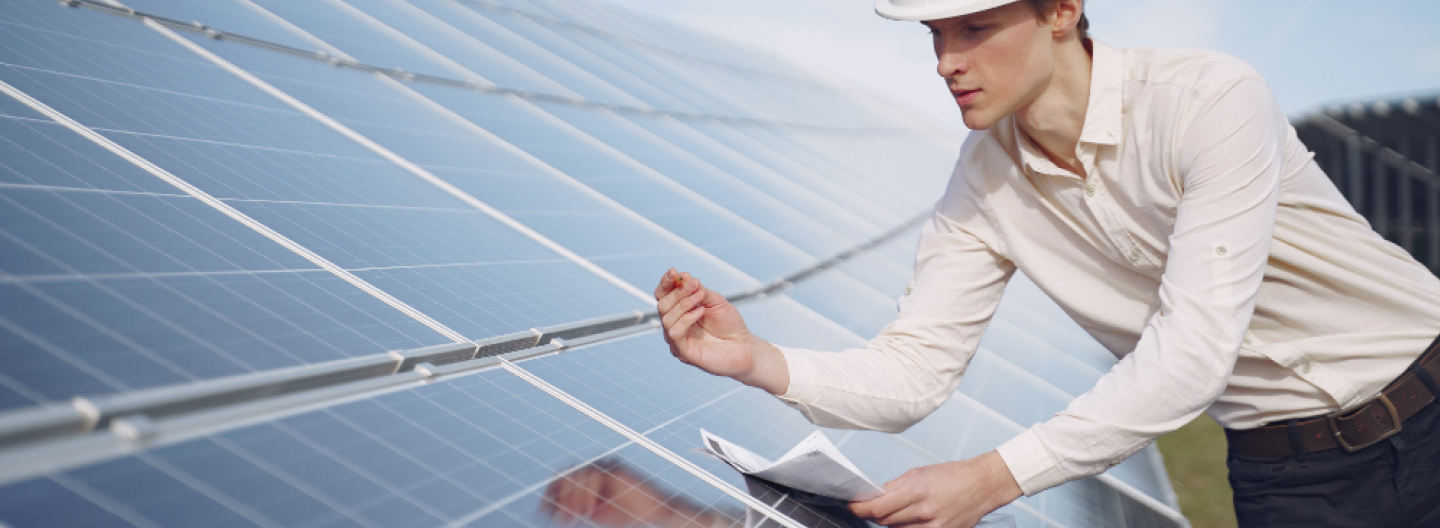
Visual inspection cannot reliably detect microcracks. Electroluminescence (EL) imaging uses the panel's own electrical current to produce an image of its cells, with damaged areas appearing as dark patches that are not visible to the naked eye.
The problem is not limited to reduced generation. The Electricity Safety site, run jointly by NSW and Queensland electricity distributors including Ausgrid, reports a Sydney factory where hail-damaged panels that had been isolated began generating electricity again after hot, sunny conditions returned, contributing to a significant fire.
Because compromised systems present ongoing electrical hazards, replacement or remediation should always be left to certified specialists. Guwing Green's in-house engineers hold active SAA accreditation, ensuring any post-storm repairs, replacements, or insurance reinstatements are handled safely and strictly to code.
What to Do After a Hailstorm
Here is how to deal with the aftermath safely.
1. Stay off the roof and away from the panels
Climbing onto the roof is the number one thing to avoid.
The Electricity Safety site warns homeowners not to touch solar panels during roof repairs or gutter cleaning. Keep the message simple: do not climb up to inspect or clear debris.
2. Follow the System's Shutdown Procedure
A solar system should be treated as live after storm damage. Sunlight can continue to generate electricity, and batteries can introduce another source of stored energy.
Do not improvise by switching random components off. According to NSW Government, homeowners should receive the documents needed to shut down and isolate their system after installation, including relevant instructions and diagrams.
Follow the shutdown procedure supplied with your system. If you cannot find it, contact your installer or a qualified electrician before touching the equipment.
3. Check from the Ground and Document the Damage
Assess your system safely from ground level. Check your inverter display or monitoring app for a sudden drop in generation, zero output, or active fault codes.
Take clear photos of any visible damage and save screenshots of any monitoring or inverter errors.
Following advice from consumer groups like CHOICE, document the issues safely, avoid touching components, and leave the detailed assessment to your insurer's appointed adjusters.
4. Contact Your Insurer and a Qualified Solar Professional
Do not restart a damaged system simply because the inverter appears normal. A cracked panel, loose fitting or exposed cable needs assessment by a licensed electrical worker before the system goes back into service.
Check the electrician's licence through the NSW Government licence checker. For solar work, you can also verify an installer's current SAA accreditation through Solar Accreditation Australia's status check. The two credentials cover different things, so both are worth checking.
Guwing Green's SAA-accredited engineers can assess the system, identify damaged components and advise whether repair or replacement is appropriate.
If you are unsure what the storm has affected, talk to one of our engineers before restarting the system.
5. Know When to Call NSW SES
NSW SES is not a solar repair service. Its role after a storm is to deal with immediate property damage and make the site temporarily safe.
Call 132 500 for storm damage such as a leaking or damaged roof. Call 000 for a life-threatening emergency.
SES volunteers can carry out temporary emergency measures, but permanent repairs are arranged through your insurer or a private contractor. Electrical and solar repairs still need to be handled by the appropriate licensed professionals.
Will Home Insurance Cover Solar Panel Hail Damage?
Policy details and claim disputes can get complicated. To find out whether your damage is covered, first check how solar panels and home insurance are treated under your policy, including any exclusions that may apply.
How Solar Fits Into Home Insurance
Manufacturer warranties on panels and inverters typically cover product defects, not damage caused by hail, storms or other external events. Weather-related damage is generally handled through insurance instead.
For standard rooftop solar, the key point is where the system sits within a home insurance policy:
- Building Cover: CHOICE considers solar panels a permanent fixture of the house, so they generally fall under building cover when the insured event is covered.
- Contents Cover: Solar panels are not normally treated as a separate household possession.
- Policy Terms: The ICA and CHOICE both advise checking the specific policy, since coverage and limits vary between insurers.
One exception to check is ground-mounted arrays or specialist commercial setups, which insurers may categorise differently. Confirm how your provider classifies the specific system before assuming the standard rules for rooftop solar apply.
This is not a small or occasional issue in NSW. AFCA has activated significant event responses for major Sydney and NSW storm events, including the Sydney hailstorms of December 2018.
Across Australia, insurers handled 294,000 claims from declared extreme weather events in 2025, nearly six times the previous year. Insured losses reached $4.8 billion, up from $585 million in 2024.
Sum Insured and Like-for-Like Replacement
CHOICE advises checking that the building's sum insured covers the cost of replacing the entire array at today's prices. The policy determines whether an approved claim is settled on a like-for-like or new-for-old basis.
If an insurer proposes a different tier or brand of equipment, it is worth asking why. Check with the original installer that the replacement will also integrate safely with the existing inverter and wiring.
On another hand, if the original installer is no longer trading, Guwing Green's SAA-accredited engineers can independently assess the existing system and specify a like-for-like replacement for your insurer.
If a Claim Is Refused
A refused claim is not necessarily the end of the process. There are formal steps available:
| Step | What It Involves |
|---|---|
| Ask for Reasons | Request the insurer's explicit reasons and copies of any assessor reports it relied on |
| Internal Dispute Resolution | Lodge a formal dispute through the insurer's own IDR process |
| AFCA | Escalate to the Australian Financial Complaints Authority, which offers free, binding dispute resolution. It also runs a dedicated response for Sydney hailstorm complaints specifically. |
Does a Solar Panel Warranty Cover Hail Damage?
The short answer is usually no, and the reasoning matters as much as the answer itself.
Why Manufacturer Warranties Usually Exclude Hail
Product warranties cover manufacturing defects, not weather. A hail-damaged panel has not failed because of a flaw in how it was made, so most manufacturer warranties do not apply.
Some manufacturers explicitly list damage from force majeure events, including hail, frost, snow and storms, as an exclusion. Warranty wording varies between brands, so check the actual warranty document for the specific system.
This is exactly why storms, hail and lightning sit outside a solar and battery warranty and belong on the building insurance policy instead.
Warranty and insurance cover two different kinds of failure, with one covering product defects and the other covering external events. Hail almost always falls into the second category.
Can You Claim STCs on Replacement Panels?
A small-scale technology certificate (STC) is the federal rebate applied as an upfront discount when a solar system is first installed.
After hail damage, a natural question is whether replacing damaged panels creates a fresh round of certificates.
The Clean Energy Regulator's own guidance is clear on this: a system with replaced panels that previously received STCs is not eligible for additional STCs.
Replacing some or all panels while keeping the existing inverter does not qualify because the system has already received STCs.
There is one exception. Replacing an entire system, including new panels and a new inverter, with no previous STC claims attached, can be eligible as a genuine "replacement system" under the Regulator's framework.
In practice, this means insurance is the usual funding route after hail damage, with no new STC rebate for a standard panel replacement. An SAA-accredited installer, such as Guwing Green's engineers, should confirm eligibility before anyone assumes an STC rebate applies to a repair.
Repairing or Replacing Hail-Damaged Solar Panels
So, can the damaged panels be repaired, or do they need replacing?
Repair vs Replace: Leave It to a Licensed Electrician
A licensed electrician must handle repairs to cracked panels, loose fittings or exposed cables.
In NSW, solar wiring must be carried out by someone holding an electrical contractor licence or an electrical qualified supervisor certificate, or working under one.
There is no safe DIY version of this. Whether a panel gets repaired or replaced is a decision for the insurance assessor and the electrician, based on what the inspection actually finds.
Matching Replacement Panels to Your Existing System
Older panel models are often discontinued by the time a replacement is needed. The replacement also needs to suit the existing wiring, inverter and mounting system.
For that reason, an SAA-accredited designer should check this compatibility before any replacement goes ahead.
At Guwing Green, this work is led by Paul Trad, a solar engineer with a Master's in Photovoltaic Systems from UNSW who has designed and delivered over 30 MW of solar energy. That includes checking replacement panels against the system's actual electrical characteristics before they are specified.
What Happens to the Old Panels
Damaged panels count as e-waste in NSW and cannot go in a council bin. Our guide on the disposal of solar panels covers where they actually need to go.
Cracked or water-damaged panels should be recycled, not resold, the same guide explains, since a panel that has already failed once is not something that belongs back on someone else's roof.
How to Reduce Hail Risk Before the Next Storm Season
None of this removes hail risk entirely, but a few decisions made ahead of a storm can make the aftermath far easier to manage.
Ask for the Hail Rating in Writing
When comparing quotes for a home solar system, ask for the panel's hail test rating and the standard used to test it.
As we previously mentioned, the baseline is 25mm. Enhanced ratings exist and vary between manufacturers, but no rating guarantees survival in an extreme storm.
A hail rating describes performance under a specific test. It does not predict how a panel will perform in every storm. Hail size, impact speed and storm conditions can all exceed the conditions used for certification.
Keep Your Shutdown Instructions and Paperwork Together
The NSW Government requires installers to provide shutdown and isolation instructions, equipment handbooks and connection diagrams after installation. Keep these somewhere easy to find in a hurry, especially after severe weather.
The electrical compliance certificate and tax invoice should also be kept with your solar paperwork. Both can provide evidence of the system's installation and purchase details if you need to make an insurance claim.
Book a Professional Check When It Makes Sense
Severe storms and hail are among the reasons Guwing Green's solar panel maintenance guide recommends an extra professional inspection outside the usual schedule. The point is to check the condition of the whole system after an event that may have affected more than the panel glass.
The inspection can cover the panels, mounting hardware, cabling and electrical connections, giving the installer a basis for deciding whether the system is safe to keep operating. Do not climb onto the roof or attempt to inspect or clean the panels yourself.
FAQs
How big does hail have to be to damage solar panels?
There is no single hail size that guarantees damage. Solar panels are tested against 25mm hail travelling at about 83 km/h, but CSIRO identifies hail above 25mm as a greater risk. Larger hail carries substantially more impact energy and can crack glass or damage cells.
Can I keep using my system after a hailstorm?
Do not assume the system is safe to use after significant hail damage. Damaged panels can expose electrical wiring and create a shock or fire hazard. If you see signs of damage, check the system's shutdown procedure and have a qualified electrician or accredited solar installer assess it before putting the system back into service.
Should I switch my solar off before a storm?
You do not need to routinely switch off your solar system before every storm. Before severe weather, make sure you know where the system's shutdown and isolation instructions are. If the system is damaged by hail, wind or debris, follow the specified procedure to isolate the system safely and keep away from damaged components. Do not switch off individual components without following the system's shutdown sequence.
How do I find a qualified electrician to inspect my system?
Start with your solar installer or retailer. If you need another professional, look for an accredited solar installer through Solar Accreditation Australia and check the electrician's NSW licence details through Building Commission NSW. Guwing Green's SAA-accredited engineers can also assess hail-damaged solar systems and identify which components need repair or replacement. Contact our team to arrange an inspection.
Do hail-damaged panels always need replacing?
No. The outcome depends on the extent of the damage. Cracked glass, damaged cells, exposed wiring or a compromised frame may require panel replacement, while minor damage may not. Microcracks can also affect performance without being visible from the ground. The condition of the panel and its electrical performance should therefore guide the decision.
Are there finance options for replacing hail-damaged solar panels?
Insurance is the usual route for storm damage, but if you are upgrading rather than repairing, the NSW Government's Home Energy Saver loan program offers eligible households zero-interest finance for solar and battery upgrades. Guwing Green is an accredited vendor under the program, delivered through finance partner Plenti. Eligibility depends on household income and other criteria, so check with our team or Plenti directly.
What Should You Do With Damaged Panels?
Solar panel hail damage does not automatically mean replacing the whole system. The extent of the damage and the condition of the affected components determine whether repair or replacement is appropriate.
Guwing Green's SAA-accredited engineers can assess the system and identify the work required. Talk to our team after a severe storm if you need your solar system checked.
Filed under