Thinking about solar panels on apartments? Solar can be a practical way for apartment buildings to reduce electricity costs and make better use of available rooftop space.
Installing solar on an apartment building is more complex than installing a system on a standalone home, though.
Before installing anything, you will need to work out who owns the roof, whether strata or the owners corporation has to approve it, how much roof space is realistically available, and how the electricity will be metered and shared.
The good news is that there are several ways apartment buildings can use solar, from individual systems for separate apartments to shared systems that distribute solar energy across multiple residences.
Can You Install Solar Panels on an Apartment?
Yes. Apartment residents and owners can access solar, but the best approach depends on how the building is structured.
For example, an apartment with its own allocated roof space and individual electricity meter may be able to have a separately connected solar system. Buildings with limited roof space may instead benefit from a shared solar system.
Because apartment roofs and other relevant areas are often common property, you will generally need to work with your owners corporation or strata body before proceeding.
In NSW, the current Solar for Apartment Residents grant specifically requires an owners corporation or authorised strata manager to apply, rather than individual apartment owners or renters.
How Do Solar Systems for Apartment Buildings Work?
Solar panels convert sunlight into electricity through photovoltaic cells. An inverter then converts that electricity into a form the building and its connected apartments can use.
The main difference with apartment solar is where the electricity goes after it is generated. Depending on the building, solar power may:
- Supply common areas such as lighting, lifts and other shared facilities.
- Supply individual apartments through separate systems.
- Be distributed between participating apartments through solar sharing technology.
- Be managed through an embedded network.
The right setup depends on the building's electrical infrastructure, metering arrangements, roof space and how residents want to share the benefits.
Four Solar Options for Apartment Buildings
1. Solar for common areas
A solar system can be connected to the building's common-area electricity supply, helping power lighting, lifts, ventilation, pumps and other shared facilities.
This reduces the owners corporation's electricity expenses without requiring every apartment to have its own system, and it is a relatively straightforward option where there is suitable roof space and a separately metered common-area supply.
2. Individual solar systems
Where apartments have separate meters and suitable roof allocation, individual solar systems can be installed for participating lots. Each apartment effectively has its own system and can use the electricity it generates.
Solar Victoria identifies direct-connected systems as an option for individually metered lots with allocated roof space. Apartment buildings do need enough suitable roof space to make this arrangement practical and equitable.
3. Shared solar system
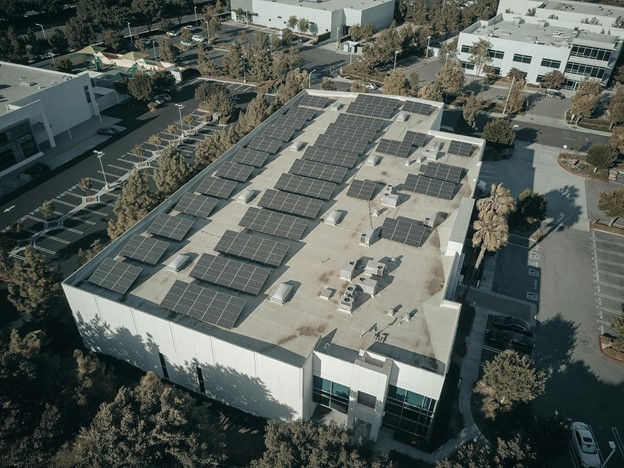
A shared solar system uses one rooftop array to generate electricity for multiple apartments. This is particularly useful where there is not enough roof space to give every apartment its own dedicated section.
Solar sharing technology distributes the electricity generated by a shared array between participating apartments, with the distribution managed through specialised hardware or software.
4. Solar with an embedded network
An embedded network can allow electricity generated within a building to be distributed through a centralised network to multiple apartments.
This arrangement tends to be more complex, with extra electrical, metering and network considerations to work through, so it is worth getting proper advice before choosing it for an apartment development.
What Should You Consider Before Installing Solar?
Installing solar panels on an apartment building requires more planning than simply choosing the number of panels.
Available roof space
The roof needs enough suitable space for the proposed system. Consider size, orientation, shading, structural condition and any existing equipment such as air-conditioning units or communications infrastructure. Our guide to solar panel dimensions and roof space covers how much area a given system actually needs.
Roof ownership and access
Apartment roofs are often common property rather than belonging to an individual apartment. This means the owners corporation or strata body may need to approve the installation and determine how the roof space can be used.
Electricity metering
Find out how electricity is currently metered throughout the building. Are apartments individually metered? Is there a separate common-area meter? Does the building already use an embedded network?
These details significantly influence which solar configuration is suitable.
How the benefits are shared
For a shared system, residents need to agree on how the generated electricity and financial benefits will be distributed. Settle this before installation so there is a clear and transparent arrangement between participating residents.
Building and electrical infrastructure
The roof and electrical infrastructure need to be suitable for the proposed installation. NSW's Solar for Apartment Residents program, for example, requires the building to be structurally suitable and allows certain enabling works where they are directly required for the solar installation.
Strata or owners corporation approval
Solar installation can involve changes to common property, so approval should be considered early. The exact process varies depending on the state, building structure and proposed system.
Getting professional advice before presenting a proposal to residents helps identify potential issues early. An energy audit of the building's actual consumption is usually the most useful thing to have in hand before a strata meeting.
Are There Government Rebates or Grants for Apartment Solar?
Government support for apartment solar can make some projects more affordable, but eligibility depends on the building, location and program requirements.
NSW: Solar for Apartment Residents
NSW currently offers the Solar for Apartment Residents grant for eligible residential strata buildings.
| Option | Share of eligible costs | Cap per project |
|---|---|---|
| Standard program | Up to 50% | $150,000 |
| Boost option (selected suburbs) | Up to 80% | $200,000 |
The current NSW program is designed for eligible residential strata buildings with 3 to 55 lots, and applications must be made by an owners corporation or authorised strata manager. The Boost option applies to buildings in selected suburbs, so it is worth checking with your strata manager whether yours qualifies.
From initial application all the way to final installation, Guwing Green has successfully delivered multiple projects under the Solar for Apartment Residents grant.
Victoria: Solar for Apartments
Victoria's Solar for Apartments Program provides funding to eligible owners corporations on behalf of residents. Solar Victoria currently advertises rebates of up to $2,800 per household for eligible apartments, units and townhouses, and supports different system configurations including direct-connected and solar-sharing systems.
Grant terms, funding rounds and eligibility criteria change from year to year in both states. Confirm the current requirements with the relevant program before making decisions or committing a building to a project.
FAQs About Solar Panels on Apartments
Can I install solar panels if I live in an apartment?
Yes, but you may need approval from your owners corporation or strata body, particularly if the installation involves common property such as the roof.
Can apartment residents share one solar system?
Yes. Shared solar systems can distribute electricity generated from one rooftop array between participating apartments. This is useful where there is not enough roof space for separate systems.
Do renters benefit from apartment solar?
They can. Under the Boost option, for example, the electricity generated has to be shared proportionately across every residential lot in the building, so renters benefit from lower electricity costs alongside owner-occupiers.
Can I use the NSW Home Energy Saver Program for apartment solar or batteries?
Yes, for your own upgrade rather than a shared building system. The Home Energy Saver Program gives eligible NSW households a zero-interest loan of up to $15,000, or a discount of up to $4,000 for lower-income households, towards solar, batteries and other energy-saving upgrades. Guwing Green is an approved provider under the program, so if your apartment has its own meter and roof space, we can help you work out whether it applies to your system.
Do I need strata approval for solar panels?
In many apartment buildings, approval will be required because the roof and other relevant areas may be common property. The specific approval process depends on your building and state regulations.
Is solar worth considering for an apartment building?
Solar can help reduce electricity costs for individual apartments, common areas or both. The potential benefits depend on factors such as roof space, energy consumption, system design and how electricity is distributed.
How do I choose the right solar system for an apartment building?
Start with a professional assessment of the building's roof, electrical infrastructure, energy consumption, metering and ownership structure. That determines whether an individual, common-area or shared solar system makes the most sense.
Ready to Explore Solar for Your Apartment Building?
Solar for an apartment building requires more than simply fitting panels onto a roof. The right solution needs to account for the building's energy usage, roof space, electrical infrastructure, metering and how the benefits will be shared between residents.
Guwing Green's SAA design-accredited engineers assess each project on its specific requirements. Our technology-neutral approach means we consider the roof, energy loads and budget before recommending a solution, the same approach we take to commercial solar and bespoke projects.
Get in touch with our team to discuss your building's requirements.
Filed under