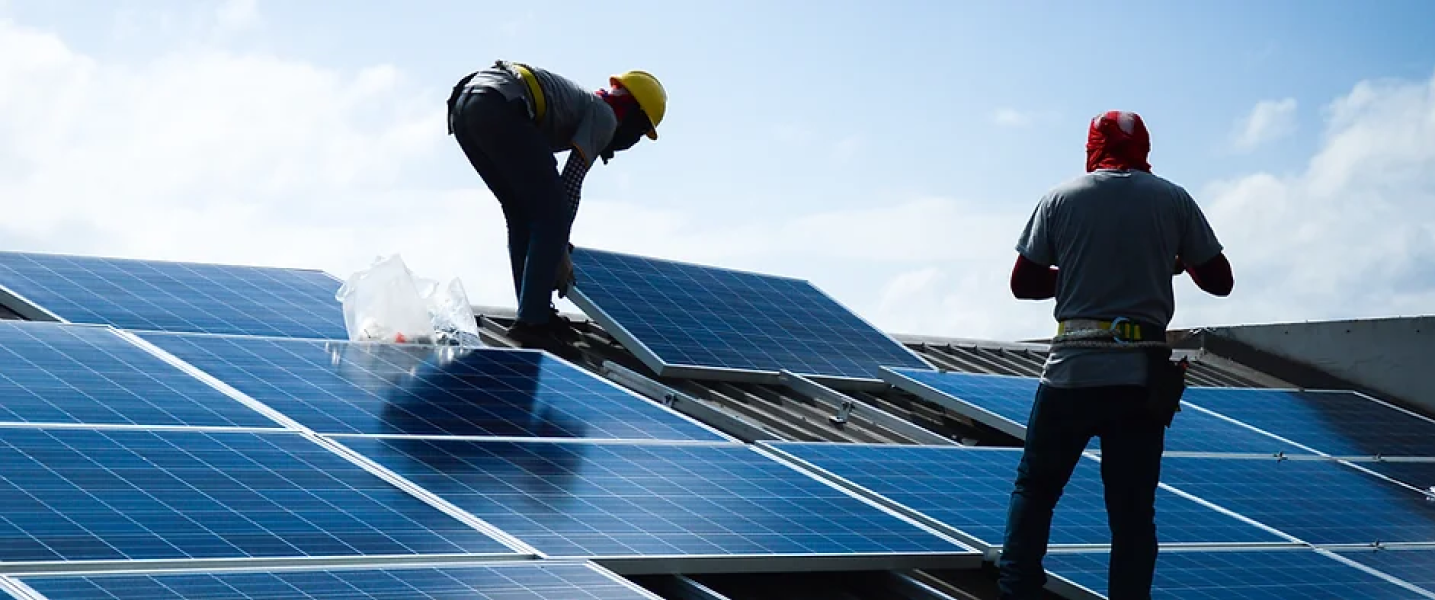
Not every roof is built for solar power. If your home has a heritage listing, heavy tree shading, an awkward orientation, or simply not enough roof space, installing solar panels on your building might not be feasible.
For acreage properties, regional blocks, and homes with unsuitable roofs, ground mounted solar panels offer a reliable, high-performing alternative.
If you are exploring custom options tailored to your property's unique layout, our team designs bespoke solar projects that maximise energy generation without compromising your roof or architecture.
What Are Ground Mounted Solar Panels?
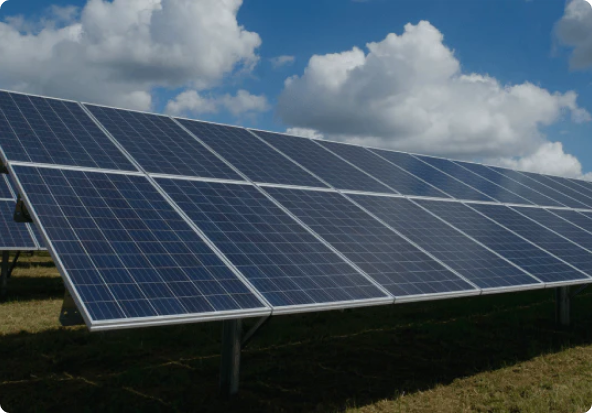
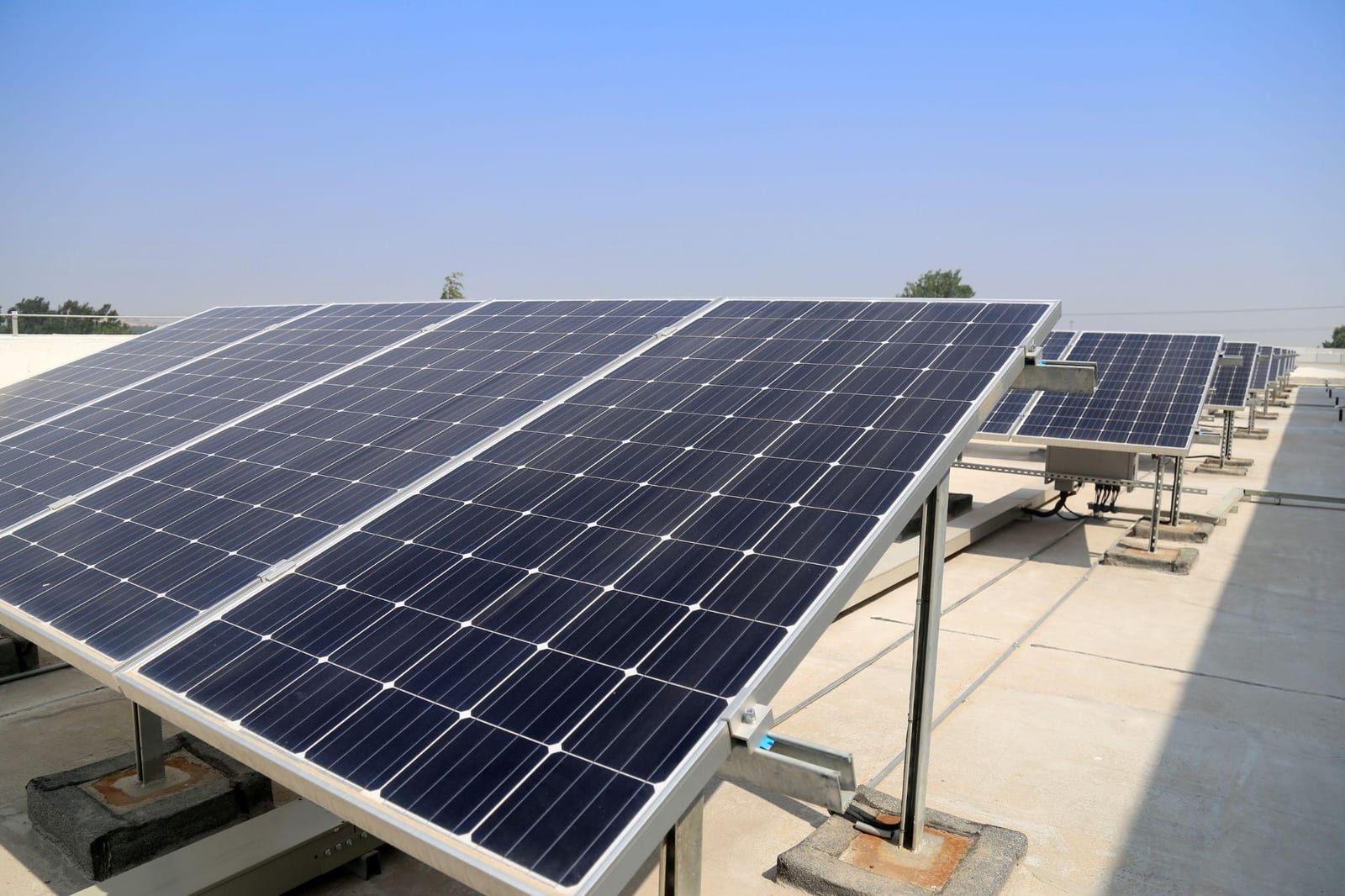
Ground mounted solar panels are freestanding solar arrays anchored directly into the earth using specialised racking systems, steel pillars, or concrete foundations. Instead of relying on the existing structural framework of a roof, the entire assembly sits independently on open ground.
While rooftop solar uses your house as its foundation, a ground-mounted array creates its own dedicated structure. This is the same engineering approach used for commercial utility-scale solar farms, scaled down to suit a single home, farm, or business.
Fixed-tilt vs pole-mounted systems
When selecting a ground-mounted setup, you will generally choose between two primary mechanical designs:
- Fixed-tilt racking systems. The panels are secured to a fixed frame at a static angle, usually optimised to match your property's latitude. This design is the most popular choice across New South Wales because it has no moving parts, requires minimal maintenance, and costs significantly less to install.
- Pole-mounted tracking systems. The panels are mounted on a single heavy-duty steel pole equipped with a tracking motor. Single-axis trackers follow the sun from east to west through the day, while dual-axis trackers also adjust for seasonal elevation. Tracking can lift annual output by around 20% for single-axis and 25% for dual-axis systems in the Sydney area, but it adds mechanical complexity, higher upfront equipment costs, and ongoing servicing.
Is a Ground Mounted System Right for Your Property?
Deciding between a rooftop or freestanding array comes down to site constraints, property size, and energy goals. Most homeowners consider ground mounting after identifying clear limitations on their main building.
When ground mount makes sense
- Heritage or architectural constraints. Your home is heritage-listed, sits in a conservation area, or features complex slate, tile, or thatch roofing that cannot support solar fixings.
- Severe roof shading. Nearby trees, chimneys, or neighbouring structures cast persistent shadows across your roof during peak generation hours.
- Unfavourable roof orientation or space. Your roof faces east-west with steep pitches, or lacks the square meterage to host the system size you need. Our guide to panel orientation covers how much that actually costs you on a roof.
- High daytime power consumption. Rural properties, agricultural operations, workshops, and businesses with heavy machinery often need larger systems. A freestanding array is an ideal way to power commercial solar loads without overcrowding farm sheds or commercial roofs.
- Expanding an existing setup. Your current rooftop array is already at capacity, but your growing household needs additional daytime generation for electric vehicles or heat pumps.
Site requirements to check first
Before committing to a ground-mounted array, your installer must verify several fundamental land characteristics:
- Solar access and terrain. You need a flat or gently sloping section of land with clear, unobstructed exposure to the northern sky.
- Flood risk. The proposed location must sit safely above 100-year flood levels to protect inverters, junction boxes, and cabling from water immersion.
- Proximity to switchboard. The array should sit as close to your main switchboard as practical. Long underground cable runs increase voltage drop and require thicker, more expensive copper cabling.
- Soil composition. The ground must be structurally sound. Soil testing determines whether steel posts can be driven directly into the earth or if concrete footings and ground screws are necessary.
Ground Mounted vs Rooftop Solar: What Actually Changes
While both options use photovoltaic cells to convert sunlight into electricity, shifting from a roof to the ground introduces key differences in cost, performance, and site management.
| Feature | Rooftop solar | Ground mounted solar |
|---|---|---|
| Upfront cost | Lower ($1.00 to $1.30 per watt net) | Higher (around $1.20 to $1.50 per watt net) |
| Orientation and tilt | Fixed by existing roof pitch and direction | Fully customisable for optimal solar harvest |
| Thermal performance | Heat builds up under panels, slightly reducing output | Excellent airflow lowers cell temperatures and boosts efficiency |
| Planning approvals | Usually exempt development on standard homes | Governed by specific setback and size limits |
| Maintenance access | Requires ladder or roof safety gear | Easy ground-level access for washing and inspections |
Cost
Rooftop solar is cheaper per watt because your home's roof acts as the support structure. Ground-mounted installations require heavy-duty steel or aluminium racking, ground excavation, concrete or screw foundations, and trenching to bury electrical conduits underground.
Expect a ground-mounted system to carry an upfront premium of roughly 20 cents per watt over an equivalent rooftop installation.
Output and performance
Ground-mounted panels frequently out-produce rooftop systems of the exact same capacity. Because you are not restricted by roof angles, your installer can pitch the array facing true north at the precise tilt required for maximum annual yield.
Air also flows freely behind elevated ground panels, so cell operating temperatures stay significantly cooler. Panels lose efficiency as they heat up, and better ventilation translates directly into higher output on hot Australian summer days.
Elevated ground frames are also one of the few configurations where bifacial solar panels earn their premium, because the rear face can capture light reflected off grass, gravel or soil. That article sets out the yield gains and where they do not materialise.
Approvals and maintenance
Installing solar on a roof rarely requires council intervention unless the property is heritage-listed. Ground mounts must adhere to local land-use planning standards covering boundary setbacks, total footprint, and height limits.
On the maintenance side, ground-level panels are far easier and safer to clean with a standard hose or brush. You will need to manage the grass, weeds, and vegetation underneath the array to prevent shading or fire hazards.
Do You Need Council Approval for a Ground Mounted System in NSW?
In New South Wales, you do not always need a formal Development Application to build a ground-mounted solar system. Many residential installations fall under exempt development rules, meaning they can proceed without council approval if specific statutory criteria are met.
When it counts as exempt development
Under the State Environmental Planning Policy (Transport and Infrastructure) 2021, a ground-mounted photovoltaic system is classified as exempt development if it satisfies all of the following:
- Maximum area. The total surface area of the system, combined with any existing ground solar on the lot, does not exceed 150 square metres.
- Maximum height. The highest point of the structure stands no more than 5 metres above existing ground level.
- Property setback. The array is installed at least 3 metres from any adjoining property boundary.
- Neighbouring dwelling setback. If the system has a generation capacity of 10kW or more, it must sit at least 10 metres from any dwelling on an adjoining property you do not own or occupy.
- Heritage limits. On a site containing a local or State heritage item, or within a heritage conservation area, the system must not be visible from any road adjoining the property boundary.
- Installation standard. The system must be installed by a technician holding active credentials with Solar Accreditation Australia (SAA).
These provisions are cumulative. Breaching any single one of them takes the whole installation out of exempt development and into the approval process.
When you need development consent
If your proposed array breaches any of the criteria above, you must obtain development approval before starting construction. You will need to submit a Development Application through the NSW Planning Portal or your local council if:
- The total array footprint exceeds 150 square metres.
- The structure stands taller than 5 metres.
- The site is subject to environmental overlays, such as high-risk bushfire zones, flood-liable land, or protected ecological communities.
- You are building a large commercial array or solar farm that exceeds residential limits.
How Much Do Ground Mounted Solar Panels Cost in NSW?
Working out the financial commitment means starting from standard rooftop pricing and adding the structural engineering, trenching, and foundation costs.
Typical price range
In New South Wales, a quality 5kW rooftop system averages around $4,900 installed, while a standard 10kW rooftop system averages roughly $8,500 after federal Small-scale Technology Certificate discounts, according to the Solar Choice Price Index for 2026. Applying the typical ground mount engineering premium brings expected turnkey costs to:
| System size | Estimated turnkey installed price |
|---|---|
| 5kW ground mounted system | $5,800 to $6,500 |
| 10kW ground mounted system | $10,200 to $11,800 |
| 20kW ground mounted system | $18,500 to $22,000 |
For larger properties, semi-rural blocks, or agricultural setups needing expanded capacity, see our pricing guides for a 20kW solar system or a commercial-scale 100kW solar system.
What drives the extra cost
- Racking and foundation hardware. Heavy-gauge galvanised steel frame systems cost significantly more than simple aluminium roof rails.
- Trenching and conduit distance. Excavating a trench between the array and your main switchboard costs between $30 and $80 per linear metre, depending on whether the ground is soft soil, hard clay, or solid rock.
- Soil testing and concrete. Soft or sandy soils require deeper augered footings filled with structural concrete, whereas rocky ground may need specialised ground screws.
- Electrical upgrades. Long cable runs require heavier cable cross-sections, such as 16mm² or 25mm² copper, to prevent excessive voltage drop over distance.
Are Ground Mounted Solar Panels Eligible for the STC Rebate?
Yes. Ground mounted systems qualify for exactly the same federal incentives as rooftop systems under the Small-scale Renewable Energy Scheme.
Certificates are awarded based on your system's expected generation through to 2030, regardless of whether the panels sit on a tile roof, a tin shed, or a metal frame in your backyard. To qualify for the upfront point-of-sale discount, your installation must satisfy four rules enforced by the Clean Energy Regulator:
- Approved products. All panels and inverters must be listed on the Clean Energy Council approved product list.
- Accredited installer. The system must be designed and installed by a professional accredited by Solar Accreditation Australia.
- Capacity threshold. Total inverter capacity must remain under 100kW, above which systems move into the Large-scale Renewable Energy Target framework.
- Correct classification. The installer submits the STC assignment paperwork using the free standing or ground mounted installation category.
Worth watching if you are planning a larger farm or commercial array: the Clean Energy Regulator announced in August 2026 that the small-scale threshold is set to expand to 1MW for mid-scale solar installed from 1 October 2026, once the supporting regulations are finalised. Confirm the current position before sizing a system around it.
Engineering a Ground Mounted System: Wind Loading and Structural Design
A rooftop array sits close to the building envelope, shielded from extreme weather by the house itself. A ground-mounted array stands fully exposed, which makes structural engineering critical to safety and longevity.
Why wind loading matters more on the ground
Because wind hits a freestanding structure from both the front and the underside, ground-mounted frames experience intense uplift and drag forces during severe storms.
In Australia, structural design for solar arrays must comply with AS/NZS 1170.2 (Structural Design Actions, Wind Actions). Engineers calculate wind pressures from several localised criteria:
- Wind region. Properties in coastal or regional NSW fall under different wind regions, requiring different steel gauge thickness.
- Terrain category. Open farmland offers very little wind obstruction, requiring stronger footings than sheltered suburban blocks.
- Tilt angle and row spacing. Steeper panel angles create greater sail area, dramatically increasing structural load on the foundation posts.
Foundation and racking options
Selecting the right foundation type prevents array movement, frame twisting, or structural failure over a 25-year lifespan:
- Concrete pier footings. Round holes are augered into the earth, typically 800mm to 1500mm deep, and filled with structural concrete around galvanised steel posts. This is the most reliable method for mixed or soft Australian soils.
- Ground screws. Large steel helical screws are driven directly into the ground using hydraulic machinery. They offer exceptional pull-out resistance, install quickly, and eliminate the need for concrete trucks on remote properties.
- Driven steel posts. Heavy C-channel or I-beam posts are hammered directly into dense soil using a mechanical pile driver. Fast and cost-effective for larger rural arrays where soil conditions permit.
- Ballasted concrete blocks. Pre-cast blocks sit directly on the ground without subterranean penetration, useful for rocky sites where digging is impossible or on capped former landfill.
Pros and Cons of Ground Mounted Solar Panels
Advantages
- Unrestricted solar placement. Orient your array due north at the ideal pitch to maximise daily production.
- Higher operating efficiency. Superior airflow behind the panels keeps operating temperatures low, boosting output on hot summer days.
- Protects heritage roofs. Avoids drilling holes, adding weight, or altering the appearance of classic, slate, or heritage roof structures.
- Safe and easy maintenance. Cleaning glass and inspecting junction boxes can be done standing on the ground.
- Simple future expansion. Adding panels or integrating storage later is far easier on an open ground frame than on a cramped roof.
Disadvantages
- Higher upfront cost. Ground racking, concrete foundations, and trenching add roughly 20 cents per watt to total project expenses.
- Consumes outdoor space. The array occupies usable land that could otherwise hold gardens, livestock, or secondary buildings.
- Potential planning rules. Larger systems or heritage-adjacent properties may require a council Development Application.
- Ground maintenance. You must manage weeds, grass, and vegetation beneath the array to prevent panel shading and bushfire hazards.
FAQs About Ground Mounted Solar Panels
Do ground mounted panels produce more electricity than rooftop panels?
Yes, in most cases. They are installed at the optimal tilt and compass orientation rather than conforming to an existing roofline, and enhanced airflow beneath the elevated panels keeps cell temperatures lower, improving efficiency during hot summer afternoons.
How much land do I need for a ground mounted solar system?
As a rule of thumb, a residential 5kW to 6kW ground-mounted array needs roughly 30 to 40 square metres of clear land. A 10kW setup needs around 60 to 80 square metres, while commercial arrays require several hundred square metres to accommodate row spacing and avoid self-shading.
Can I add a ground mounted system alongside my existing rooftop solar?
Yes. If your rooftop array is maxed out but your daytime consumption has increased, you can add a secondary ground-mounted system on the same property. An accredited installer will integrate the new array through a secondary inverter or smart meter configuration to keep the site grid compliant.
Is Guwing Green an approved provider for the NSW Home Energy Saver Program?
Yes. Guwing Green is an accredited vendor under the NSW Home Energy Saver Program, delivered through Plenti, one of the scheme's two government-backed finance partners. Eligible NSW homeowners and landlords can pair a ground-mounted or rooftop system with a zero-interest loan of up to $15,000 on top of the federal STC rebate, rather than paying the balance upfront.
Conclusion
Ground mounted solar panels are a high-performing alternative when your roof cannot host a standard array. By providing complete freedom over tilt, orientation, and system size, a freestanding array lets you generate maximum clean energy regardless of roof shade, age, or architectural style.
Complying with the NSW exempt development rules and meeting Australian wind loading standards is what separates a safe, long-lasting investment from an expensive problem.
Whether you need a custom system for an acreage property or a hybrid setup for everyday Aussie homes, getting the structural engineering right from day one is essential.
If your roof is not the answer, whether it is heritage-listed, shaded most of the day, or simply not big enough, a ground mounted system might be. Our SAA-accredited engineers will check your site, confirm what NSW planning rules apply, and design a solution built for your block. Explore our bespoke solar projects or request a proposal to walk through your options.
Filed under