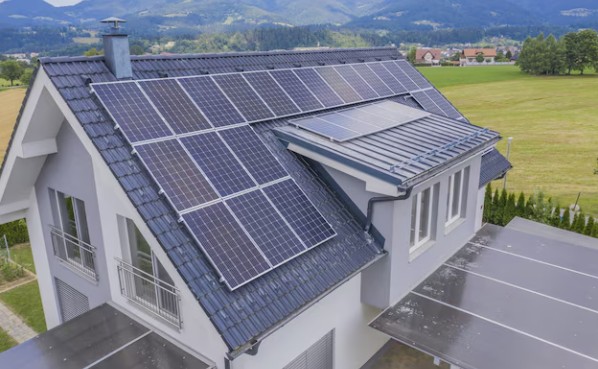
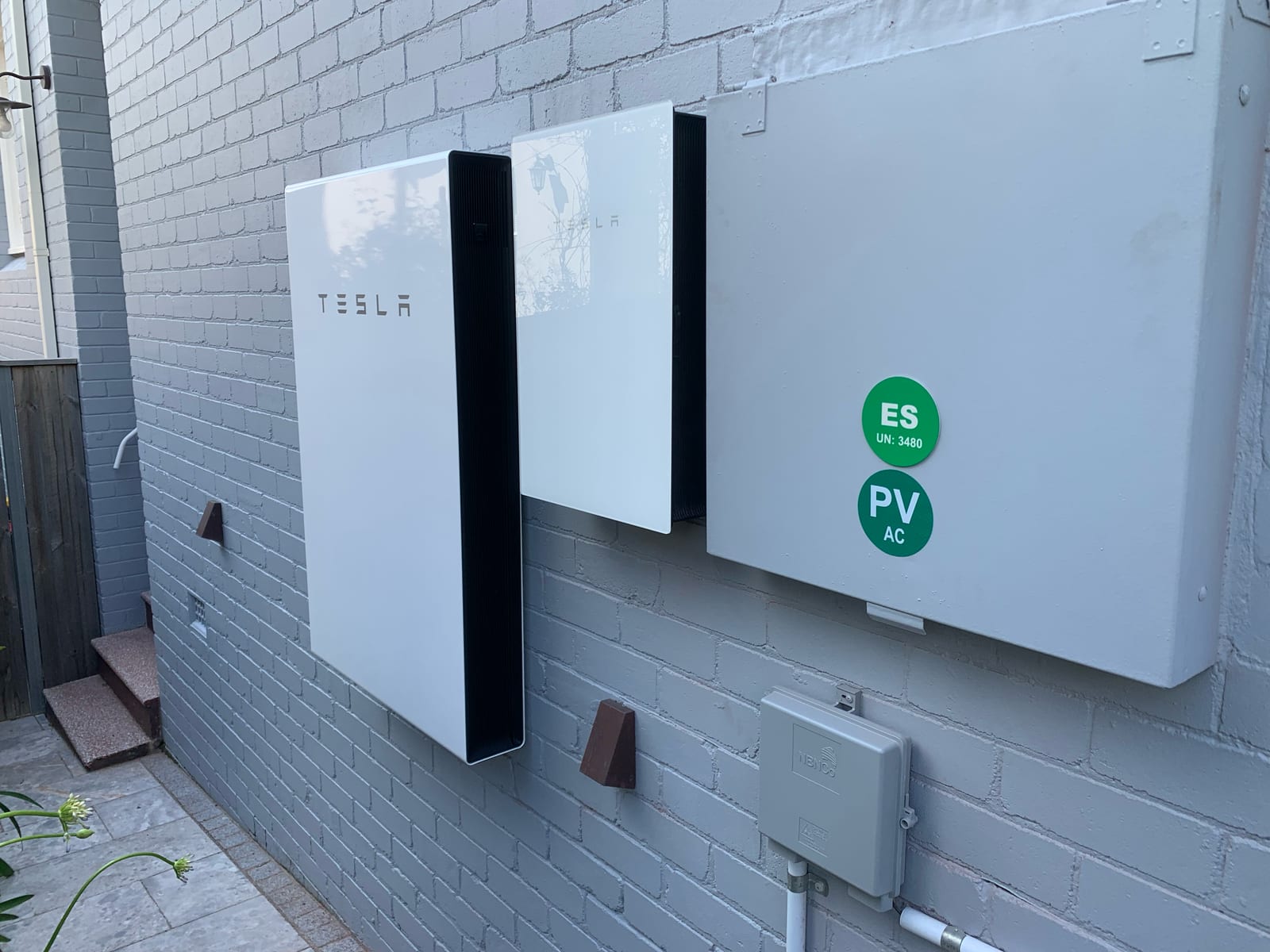
The NSW Government puts the solar battery cost for a home install at roughly $6,000 to $24,000, depending on the battery's size, the model and who installs it.
The federal discount takes a fair chunk off that. A 10 kWh battery installed before the end of 2026 gets about $2,720 off, and we'll show you exactly how that figure is worked out.
A quick note before we go further: this article is about home battery systems measured in kilowatt-hours (kWh) that store your solar power, not the 12V or camping batteries that tend to appear in shopping results for the same search.
At Guwing Green, our engineers have found that most people can tell whether a battery price is fair once they can see how it's built up. So we'll walk through how the federal Cheaper Home Batteries Program discount is calculated, what NSW adds on top, what pushes a quote up or down, and what a clear quote should show you.
Last checked: 30 October 2026. The federal discount next steps down on 1 January 2027.
How Much Does a Solar Battery Cost in Sydney?
Most home batteries in Sydney cost somewhere between $6,000 and $24,000 installed, and three things decide where yours lands: how much storage you buy, which model it is, and what the installation involves. Every figure below comes with its source and date.
How much does a 10 kWh solar battery cost?
A 10 kWh battery sits towards the lower end of the NSW Government's $6,000 to $24,000 range. The federal discount takes about $2,720 off if it's installed before the end of 2026.
As an independent check, CHOICE puts a 10 kWh battery at roughly $7,000 to $11,000 installed after the federal discount, based on pricing from SolarQuotes. Where your final price lands depends on the brand, whether your existing inverter can run a battery, and how much backup and installation work your home needs.
People often search for a "10kW battery" when they mean 10 kWh, and the difference matters. kW is how fast a battery can deliver power, while kWh is how much energy it can store, and it's the kWh figure that drives the price.
If you're not sure yet how big a battery you need, our sizing guide walks you through it using your own usage. If you'd rather hand it over, our engineers can size it for you from your bills and interval data.
What does a solar battery cost per kWh?
Bigger batteries usually cost less per kWh, because the labour, inverter and set-up costs are spread across more storage. The federal discount works the other way, though. For batteries installed in 2026, it's worth about $272 per kWh for the first 14 kWh, about $163 per kWh from 14 to 28 kWh, and about $41 per kWh from 28 to 50 kWh, based on DCCEEW's formula.
That's why the per-kWh price after the discount doesn't keep falling as you go bigger. From what we see on Sydney roofs, the right battery comes down to your evening usage, your existing inverter and your budget, not the lowest figure per kWh.
What the Federal Discount Takes Off the Price
Installed prices vary too much between brands, homes and installers for one price list to be useful. What doesn't vary is the federal discount, because it follows a published formula. Here's what it's worth for common battery sizes:
| Usable size | Discount if installed May to Dec 2026 | Discount if installed Jan to Jun 2027 |
|---|---|---|
| 5 kWh | about $1,360 | about $1,120 |
| 10 kWh | about $2,720 | about $2,280 |
| 13.5 kWh | about $3,640 | about $3,040 |
| 20 kWh | about $4,760 | about $4,000 |
So when you're comparing quotes, the discount line is one number you can check yourself. If a quote for a 10 kWh battery installed this year shows much less than about $2,720 off, it's fair to ask why. On a Guwing Green quote, you'll see the gross price, the discount and the net figure on the same page, so you can check it against this table yourself.
How the Cheaper Home Batteries discount works
The program gives households, businesses and community organisations a discount of around 30% on batteries from 5 kWh to 100 kWh, funded by the federal government. You don't apply to the government yourself. Your installer either takes the discount off the price up front or pays it back as a rebate after installation.
The discount comes from small-scale technology certificates, or STCs. Think of an STC as a credit your battery earns, which the government then buys to fund your discount. The Clearing House price for each certificate is currently $40 (excluding GST), according to DCCEEW's STC page (updated 9 July 2026).
To qualify, the Clean Energy Regulator says your battery needs to be new, between 5 and 100 kWh, installed with new or existing solar, on the Clean Energy Council approved battery list, fitted by an SAA-accredited installer with a battery endorsement, and technically able to join a virtual power plant. Only one battery system per property can claim.
When does the discount drop next?
The discount is set by the STC factor on the day your battery is installed, not the day you sign. DCCEEW's schedule steps down every six months until 2030:
| Installed between | STC factor |
|---|---|
| May to December 2026 | 6.8 |
| January to June 2027 | 5.7 |
| July to December 2027 | 5.2 |
| January to June 2028 | 4.6 |
| July to December 2028 | 4.1 |
| January to June 2029 | 3.6 |
| July to December 2029 | 3.1 |
| January to June 2030 | 2.6 |
| July to December 2030 | 2.1 |
DCCEEW says the program will be reviewed at least once a year and the discount will keep falling as battery prices come down. We'll update this section on 1 January 2027.
What NSW Adds on Top of the Federal Discount
The federal discount does most of the heavy lifting. NSW support has changed a lot over the past year, though, and plenty of older articles still list rebates that no longer exist, so here's what's current.
The NSW battery installation discount has closed for households
The NSW Government's battery installation discount for homes is no longer available. It was suspended from 1 July 2025 because the federal discount is larger (page updated 1 July 2026). If you come across an article that still promises a NSW installation rebate on top of the federal one, it's out of date. Businesses are a different story, though. NSW launched a separate business battery discount on 1 September 2026, which we cover in the FAQs below.
The NSW Virtual Power Plant incentive
NSW does still pay you for joining a virtual power plant, or VPP, which is a network of home batteries that a provider can draw on when the grid is under pressure. According to the NSW Government's VPP page (updated 31 August 2026), the incentive is paid in instalments, up front or as a bill credit, and it comes on top of whatever the provider pays you for your stored energy.
To be eligible, you need to be a NSW household or small business with a grid-connected battery between 2 and 50 kWh (the 50 kWh limit has applied since 1 July 2026).
You'll also need to sign up with a VPP provider that offers the incentive and be with an electricity retailer that supports VPPs. It's one claim per electricity meter, and it can't be used with the NSW apartment building battery discount. You can, however, combine it with the federal discount.
How much you get depends on your battery's usable capacity, counted up to 28 kWh, along with the provider and the contract. The NSW Government doesn't publish a set dollar figure, and estimates elsewhere vary quite a bit, so we'd rather not quote one.
Ask each VPP provider what they'll actually pay for your battery, and read the contract terms alongside the number. Our engineers can tell you which incentives apply at your address and recommend a battery that works with the VPPs in your network area.
Home Energy Saver zero-interest loans
If the upfront cost is the hurdle, NSW's Home Energy Saver loans offer up to $15,000 interest-free for eligible upgrades, including a battery. They won't lower the price, but they do let you spread it out without paying interest.
According to the NSW Government (page updated 26 October 2026), you need to own the property (landlords can apply too), be an Australian citizen or permanent resident, and have a combined taxable household income of up to $210,000 a year.
The loans are delivered through two finance providers, Brighte and Plenti, and your upgrade needs to come from one of their approved suppliers. Guwing Green is an accredited vendor on Plenti's Home Energy Saver vendor directory, so if you're eligible, you can put a Plenti loan towards a battery we design and install.
NSW has also announced Home Energy Saver discounts of up to $4,000 for homeowners and renters with a combined gross household income of up to $80,000 a year or an eligible concession card. Applications haven't opened yet, but if you think you'll qualify, the NSW Government recommends applying for the discount before the loan.
What Can Change the Price of a Battery

Two quotes for what looks like the same battery can easily be a few thousand dollars apart. Usually that isn't anyone being dodgy. The quotes are just pricing different amounts of work, and these are the main reasons.
Battery size and how much you actually need
The price goes up with size, but the cost per kWh comes down, so a bigger battery can look like better value on paper. In practice, the federal discount per kWh tapers above 14 kWh, and DCCEEW points out that a battery too large for your solar and inverter can limit the benefits.
From what our engineers see, the best value usually comes from matching the battery to how much power you use after dark, which is exactly what our sizing guide helps you work out.
How much does it cost to add a battery to existing solar?
It mostly depends on whether your current inverter is a hybrid that can run a battery. If it is, you're mainly paying for the battery and installation. If it isn't, you'll need either a new hybrid inverter or a battery that brings its own, and that adds to the price. Some batteries, such as the Tesla Powerwall 3, have the inverter built in.
If you'd rather keep your existing inverter, an AC-coupled battery sits alongside your current system instead of replacing part of it.
When we add a battery to solar that another company installed, we health-check the existing system first and then, where it suits the setup, install a separate AC-coupled battery that charges from it. Keeping the two systems separate helps protect your existing warranties and makes it clear who's responsible if something needs fixing later.
The federal discount applies whether your solar is new or existing. If your home already received support for a battery, check the DCCEEW eligibility rules before adding more capacity.
Backup power, location and installation extras
The simplest installs are the cheapest: the battery sits right next to the switchboard, with only a couple of essential circuits on backup and no extra protection needed.
Costs go up with more backup circuits, a longer cable run from the switchboard, a switchboard upgrade, fire-resistant backing, or bollards to protect the battery from cars.
None of these are extras for the sake of it. Where a battery goes and what it needs around it are set by the safety rules for your particular home, which is why it's worth having an engineer look at the site before you lock in a price.
On a Guwing Green quote, any of these extras appears as its own line item, so you can see exactly what you're paying for before you sign.
Is a Solar Battery Worth the Cost in NSW?
The NSW Government says a battery can save or earn you $600 to over $2,500 a year, counting both lower bills and VPP payments. It puts the payback at about seven years, followed by another three to eight years of free energy, based on an average family of four with a 12 kWh battery and 6.6 kW of solar.
Your own numbers will differ, because they depend on what you pay for electricity, how much you use after dark, the size of your system and your feed-in tariff. That last one has been moving in a battery's favour. IPART's 2026-27 all-day feed-in benchmark is 3.4 to 6.5 c/kWh, down from 4.8 to 7.3 c/kWh the year before, so the less you're paid for exporting solar, the more each stored kWh is worth to you.
Our guide to the solar battery payback period shows how to run the numbers for your own home.
If you're still weighing it up, our guide on whether a solar battery is worth it covers the trade-offs in more detail.
Prefer a firm number for your own home before you commit? Our engineers can run an energy audit that turns twelve months of your interval meter data into a payback model, so you're deciding on real figures rather than an average.
Solar Battery Cost FAQs
Can I still get a NSW Government rebate for a home battery?
Not as an installation discount. The NSW battery installation discount is no longer available for households. You can still get the federal Cheaper Home Batteries discount, the NSW VPP incentive if you join a participating VPP, and a Home Energy Saver zero-interest loan if you're eligible. Each is covered in the sections above.
Is Guwing Green approved for the Home Energy Saver program?
Yes. Guwing Green is an accredited vendor on Plenti's Home Energy Saver vendor directory, so eligible NSW homeowners and landlords can use a zero-interest loan of up to $15,000 towards a battery we install. The federal Cheaper Home Batteries discount also requires an SAA-accredited installer, and every battery we fit is installed by our own SAA-accredited team rather than subcontractors. We take that discount off your quote at the point of sale. We're also a New Energy Tech Consumer Code (NETCC) Approved Seller, which commits us to the code's consumer protection standards.
Can I get the discount if I add a battery to solar I already have?
Yes. The federal discount covers batteries connected to new or existing solar. The battery must be new, between 5 and 100 kWh, and fitted by an SAA-accredited installer, and only one battery system per property can claim, according to the Clean Energy Regulator.
Do businesses get the same federal discount?
Yes. DCCEEW lists households, businesses and community organisations as eligible, for batteries from 5 to 100 kWh. NSW businesses installing a battery of 20 kWh or more may also qualify for the separate NSW batteries for businesses incentive, available since 1 September 2026. The NSW Government says it can be combined with the federal discount if you meet the rules for both. If you're weighing up storage for a workplace, our guide to commercial battery storage covers how the numbers work for businesses.
Will the battery discount be lower next year?
Yes. The STC factor drops from 6.8 to 5.7 on 1 January 2027, then to 5.2 on 1 July 2027, and the factor that applies is set by your installation date. For a 10 kWh battery, that's about $2,720 now versus $2,280 from January. The full schedule is in the table above.
Can I claim the discount myself instead of through my installer?
Yes. As long as you don't assign the certificates to your installer, you can create and trade them yourself through the REC Registry, according to DCCEEW. It's usually simpler to let your installer handle it and take the discount off the price.
How to Get a Battery Price That Fits Your Home
A battery's price comes down to its usable kWh, how much backup you want and what the installation involves.
The federal discount depends on the date your battery is installed and steps down on 1 January 2027. Whoever you choose, a clear quote should show that discount against the price so you can check the sum yourself.
The figures above are a good starting point, but the most useful number is the one built around how your home actually uses power.
Want a battery price based on your own usage, not a generic range? Every Guwing Green system is designed by an SAA-accredited engineer and installed by our own team, with the federal discount and every other figure shown on your quote.
If you're eligible, you can also spread the cost with a zero-interest Home Energy Saver loan through Plenti. See how we handle solar battery installation in Sydney or talk to one of our engineers, and we'll start with your own electricity data.
Filed under